[Intern’s Log📝] It’s a Piece of (Rice) Cake! 🍡 –Rice cake (떡) Themed Idioms
Learn five fun, everyday Korean idioms about rice cakes and discover the sweet history behind them!
![[Intern’s Log📝] It’s a Piece of (Rice) Cake! 🍡 –Rice cake (떡) Themed Idioms](https://storage.ghost.io/c/7d/bb/7dbb35a0-481d-4d75-96b3-9a77564f9669/content/images/size/w1200/2026/10/Gemini_Generated_Image_4th3ih4th3ih4th3.png)
[Intern’s Log]
Welcome to our new series! 👋Follow along as our American intern shares authentic first-hand experiences, cultural insights, and Korean language realizations while living in Seoul. 🏙️✨
With the recent passing of Chuseok, one of Korea’s most prominent holidays, the fall season 🍂 is officially in full swing. During Chuseok, families traditionally enjoy a variety of specific foods during this time. One staple is 송편, which are half moon shaped rice cakes usually stuffed with a sweet or nutty filling 🥜🍯.
Learn more about Chuseok here.
떡 (rice cake) is a staple in Korean cuisine today, but when Korea was still a newly developing country, rice cake was considered a luxury food item. For that reason, it is used in many Korean idioms to symbolize prosperity or something of great value. Before we jump into the rice cake related idioms, let’s talk about the historical significance of rice cakes to Korea.
[📖 History and Significance]
Historically, Korea's mountainous terrain made rice cultivation difficult, leading to a severe scarcity of the crop. During the Joseon Dynasty, rice was considered such a luxury that its consumption was largely restricted to high-ranking officials. This shortage persisted through the Japanese occupation period, as Korea was forced to supply much of its rice to Japan. As rice eventually grew more accessible, it remained a treasured resource as it transitioned into a celebratory staple for holidays, weddings, and special events. Although rice cakes are eaten more casually today, they retain their profound historical and cultural importance and are still featured prominently during special occasions.
[🥢 Popular Examples]
The following five idioms are only a few of the popular sayings that utilize 떡.
- 🛌🍡누워서 떡 먹기
- Literal translation: To lie down and eat rice cake.
- Similar English idiom: To be a piece of cake/ As easy as pie
- Explanation: Used to describe something that requires little to no effort.
Example: 저는 요리를 좋아해서 불고기 정도는 누워서 떡 먹기예요.
(I love cooking, so even making bulgogi is as easy as pie.)
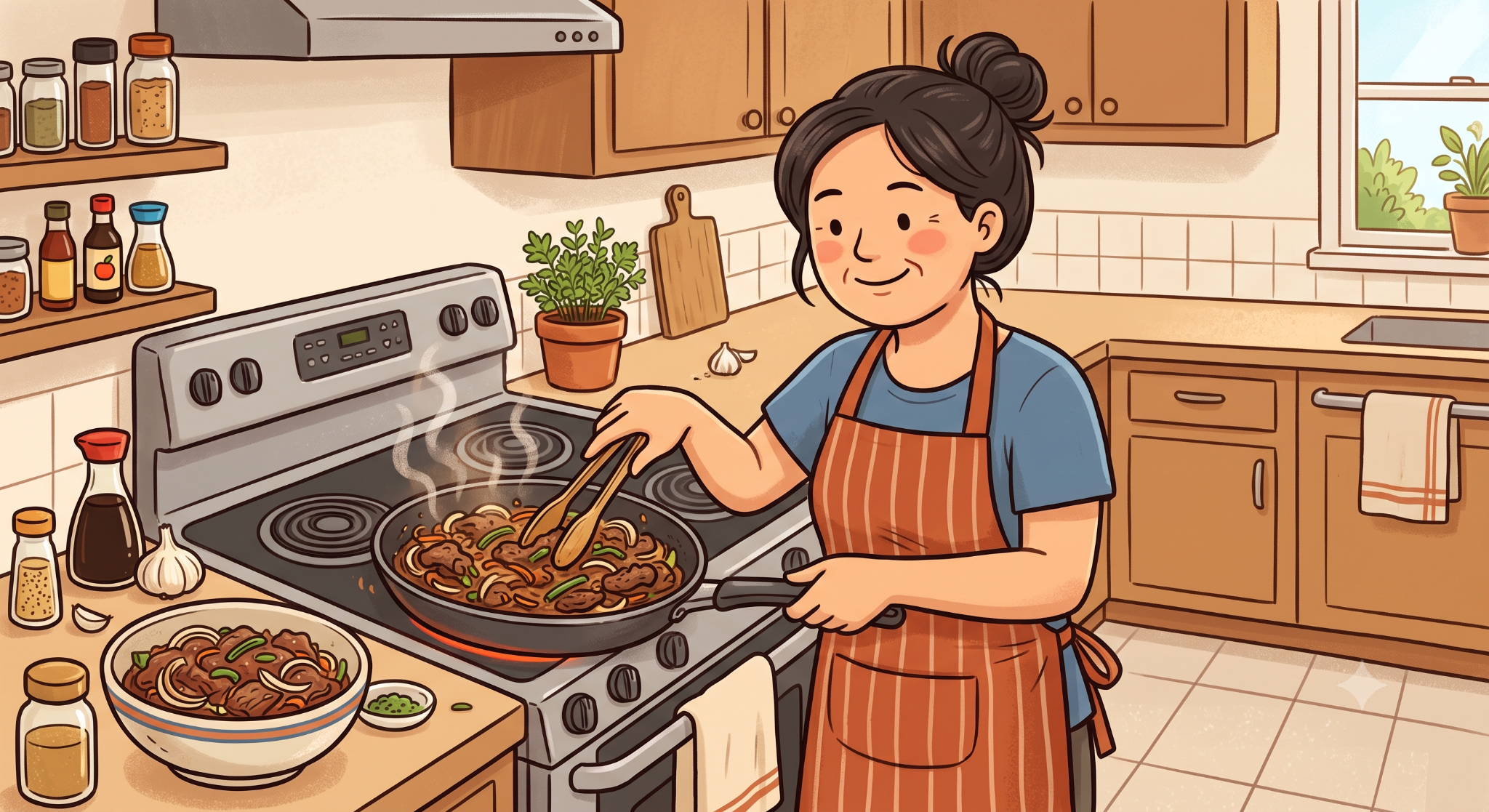
Generated with AI
- 🖼️🤤그림의 떡
- Literal translation: Rice cake in a picture
- Similar English idiom: Pie in the sky/ Out of reach
- Explanation: Used to describe something that is or seems unattainable.
Example: 저도 여행 가고 싶은데, 요즘같이 바쁠 때는 그림의 떡이죠.
(I'd love to travel but with how busy I am lately, it's like pie in the sky.)

Generated with AI
- 👀🍰남의 떡이 더 커 보인다
- Literal translation: Someone else’s rice cake looks bigger than mine.
- Similar English idiom: The grass is greener on the other side.
- Explanation: Used to express envy over things that someone else has, or the feeling that someone else’s things are better than your own.
Example: 친구 회사 얘기를 들을 때마다 거기로 이직하고 싶은데, 친구는 제 회사가 더 좋은 것 같대요. 남의 떡이 더 커 보인다는 말이 맞는 것 같아요.
(Hearing about my friend's workplace makes me want to switch jobs, but she says she envies mine. It really shows that we always want what we don't have.)
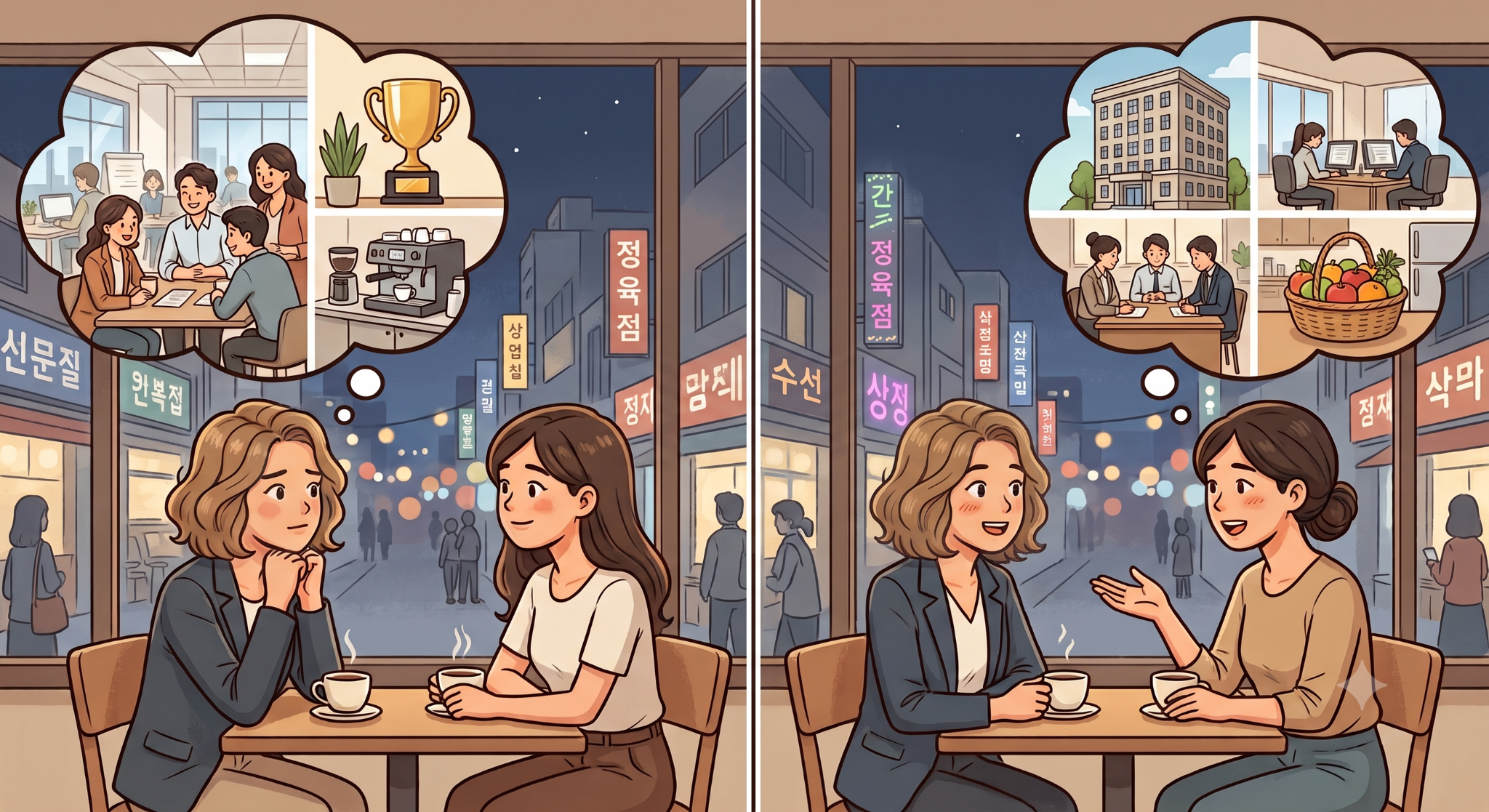
Generated with AI
- 😠🤝미운 아이 떡 하나 더 준다
- Literal translation: Give an extra rice cake to the child you dislike.
- Similar English idiom: Kill them with kindness
- Explanation: Used when you act extra friendly or give extra care to someone you find difficult to like.
Example: 저에게 자꾸 시비를 거는 동료에게 미운 놈 떡 하나 더 준다 생각하고 먼저 커피를 사주고 다가갔어요.
(I decided to buy coffee for the coworker who kept picking fights with me, in order to kill him with kindness.)

Generated with AI
- ✨🍽️보기 좋은 떡이 먹기도 좋다
- Literal translation: Rice cake that looks good, will taste good.
- Similar English idiom: ‘What looks good, is good.’ or ‘Names and natures do often agree.’
- Explanation: To say that presentation matters. A product that is well-presented, will be well-received.
Example: 음식을 예쁜 접시에 담으니까 더 맛있는 것 같아요. 역시 보기 좋은 떡이 먹기도 좋다고 하잖아요.
(Putting the food on a pretty plate makes it taste even better. As they say, what looks good, tastes good.)
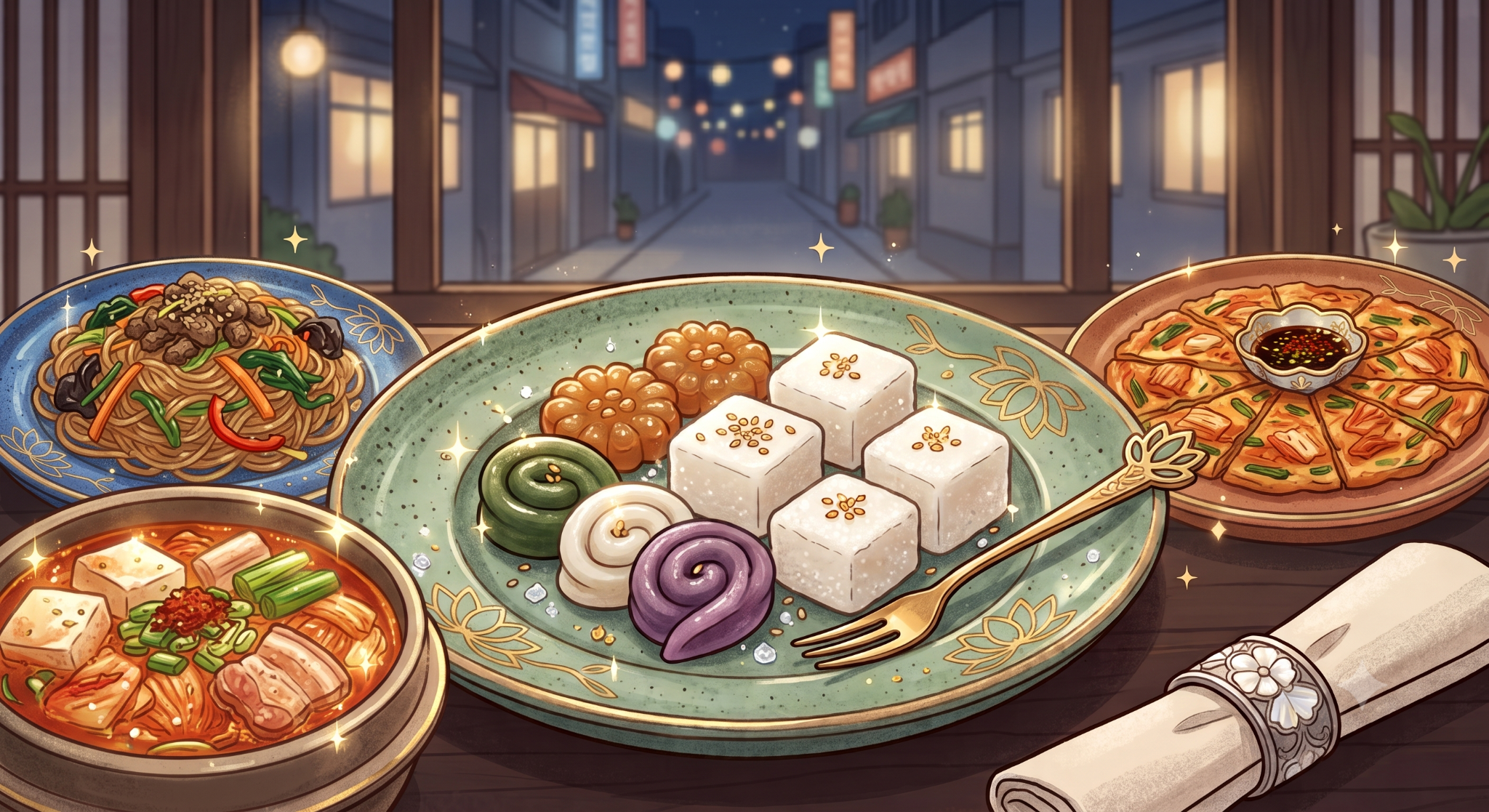
Generated with AI
Korean conversations are full of colorful idioms. Exploring these rice cake expressions is a sweet way to connect with the language while dipping your toe into Korean history and culture. So, the next time you're studying Korean 📚or enjoying a chewy dessert 🍡, try slipping one of these expressions into your conversation. With a little practice, mastering Korean idioms will truly be a piece of (rice) cake! Happy studying! 🎓✨
👤 Meet the Author
Lee Siyeon | TTMIK Content Intern 💼
An American student living in Seoul, exploring the subtle nuances between language and culture. Currently navigating Korean workplace etiquette at Talk To Me In Korean!
![[Intern’s Log📝] Elevate Your Korean Proficiency with Hanja](https://storage.ghost.io/c/7d/bb/7dbb35a0-481d-4d75-96b3-9a77564f9669/content/images/size/w720/2026/10/hanjaimage.png)