[Intern’s Log📝] Elevate Your Korean Proficiency with Hanja
![[Intern’s Log📝] Elevate Your Korean Proficiency with Hanja](https://storage.ghost.io/c/7d/bb/7dbb35a0-481d-4d75-96b3-9a77564f9669/content/images/size/w1200/2026/10/hanjaimage.png)
[Intern’s Log]
Welcome to our new series! 👋Follow along as our American intern shares authentic first-hand experiences, cultural insights, and Korean language realizations while living in Seoul. 🏙️✨
Ever wonder how advanced Korean learners memorize thousands of words? The truth is they don’t! While there is a good percentage of native Korean words which unfortunately do require rote memorization, according to the National Institute of Korean Language, upwards of 60% of Korean words are composed of Hanja. By having even a basic understanding of Hanja, you build a strong foundation for many common Korean words and concepts.
[📖 History]
The Roots of the Korean Language
At the most basic level, Hanja are characters used in the Korean language that stem from Chinese characters. Historically, before Hangeul was invented, the people of the Joseon Dynasty used Chinese characters for all of their written communication📜. The Chinese characters themselves were already immensely difficult to learn and on top of that, the Korean adaptation of those characters to written language made literacy a luxury reserved for high ranking male officials who needed written language for political matters. Even after Hangeul was created, it was looked down upon as a lesser form of language used mostly by women and the lower class. However, because of how deeply ingrained these roots became, much of the advanced vocabulary we use today still traces back to Hanja.
The Invention of Hangeul 🇰🇷
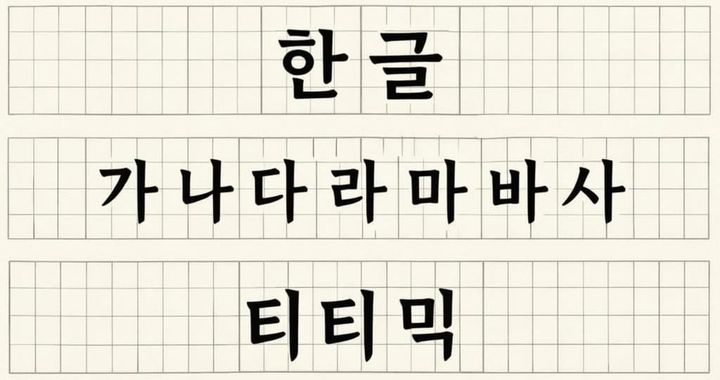
As it is now October 🍂, South Korea celebrates 한글날 (Hangeul Day) on October 9th to commemorate the invention and publication of the Korean alphabet. Originally published under the title 훈민정음 (roughly translated as ‘The Proper Sounds for the Instruction of the People’), King Sejong the Great created this system in 1443 and promulgated it in 1446 to give his people an accessible form of written communication. This historic innovation served two major purposes for the Joseon people:
- It gave the government an easy way to communicate with a growing nation.
- Because Hanja was tied to Chinese characters, the creation of Hangeul gave the people of Joseon a distinct, independent identity and voice.
So, how does all this history help you today?
[🔎 Modern Significance]
Even though Hanja isn't actively used in modern Korean writing anymore, learning a few characters is still a total game-changer for a few reasons.
First, roughly 60% of the Korean vocabulary comes from Hanja. Once you know the building blocks, you can easily guess what unfamiliar words mean on the fly!
- Example: 여 (女) means female, and 자 (子) means child/person.
- Put them together — 여자 (女子) — and you get woman/girl.
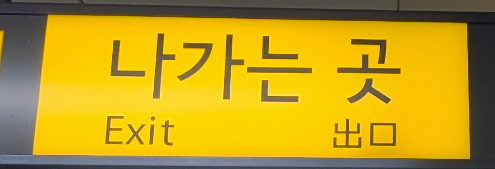
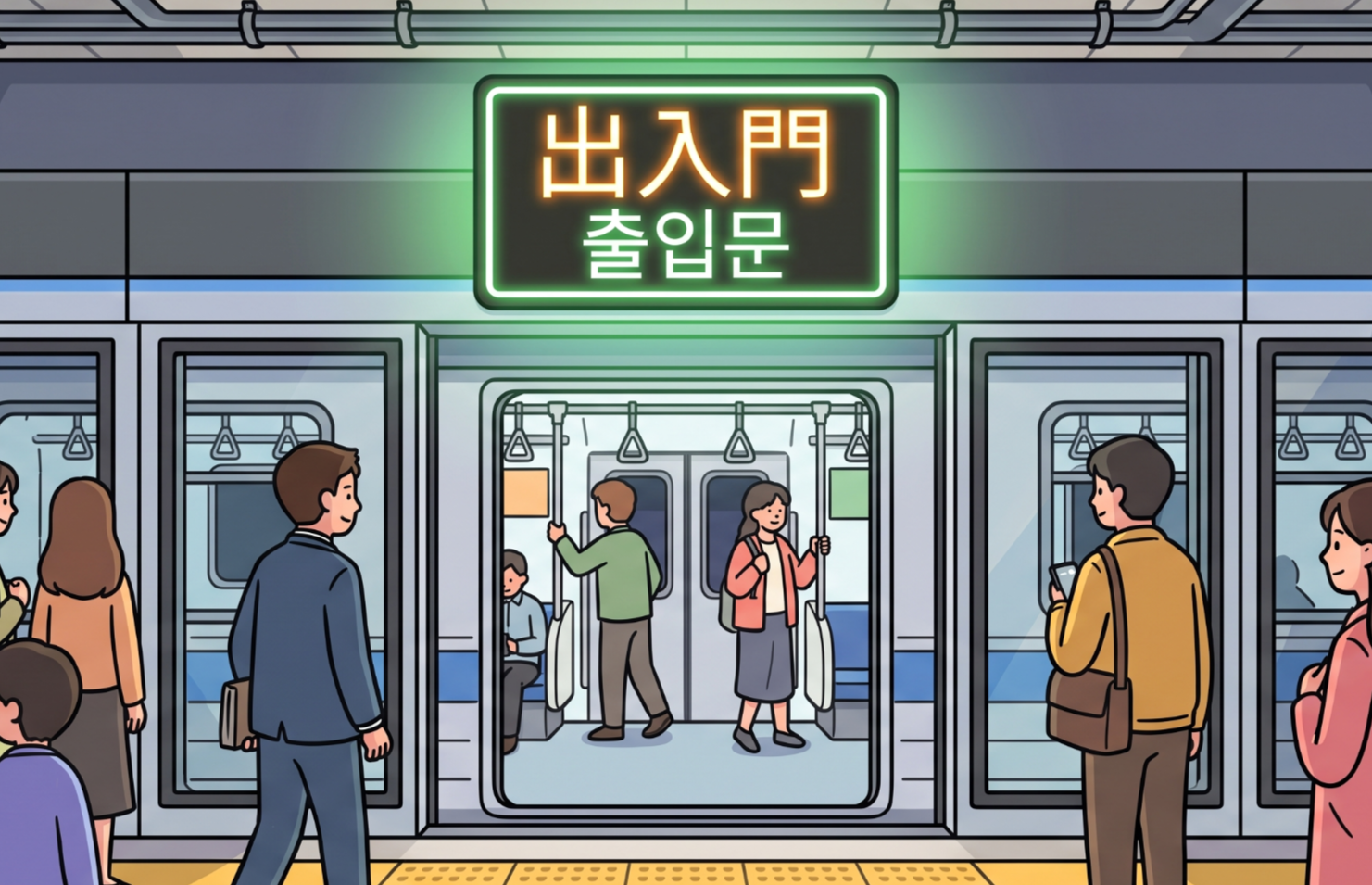
On top of boosting your vocabulary, you'll actually see Hanja out in the wild when exploring Korea! Public signs—like 'Entrance' or 'Exit'—frequently feature both Hangeul and Hanja. You definitely don't need it to survive in Korea, but it’s a super fun extra tool to have in your language toolkit.
🧩 Putting the Pieces Together
With over a million recorded words, Korean is one of the most vocabulary-rich languages in the world. Especially as a learner, having sufficient knowledge of Hanja not only makes learning and memorizing vocabulary easier, it also gives you the ability to make more educated guesses and elevate your language skills. Plus, studying Hanja introduces you to basic word parts, helping you understand how Korean builds compounds by attaching pieces to a core root word.
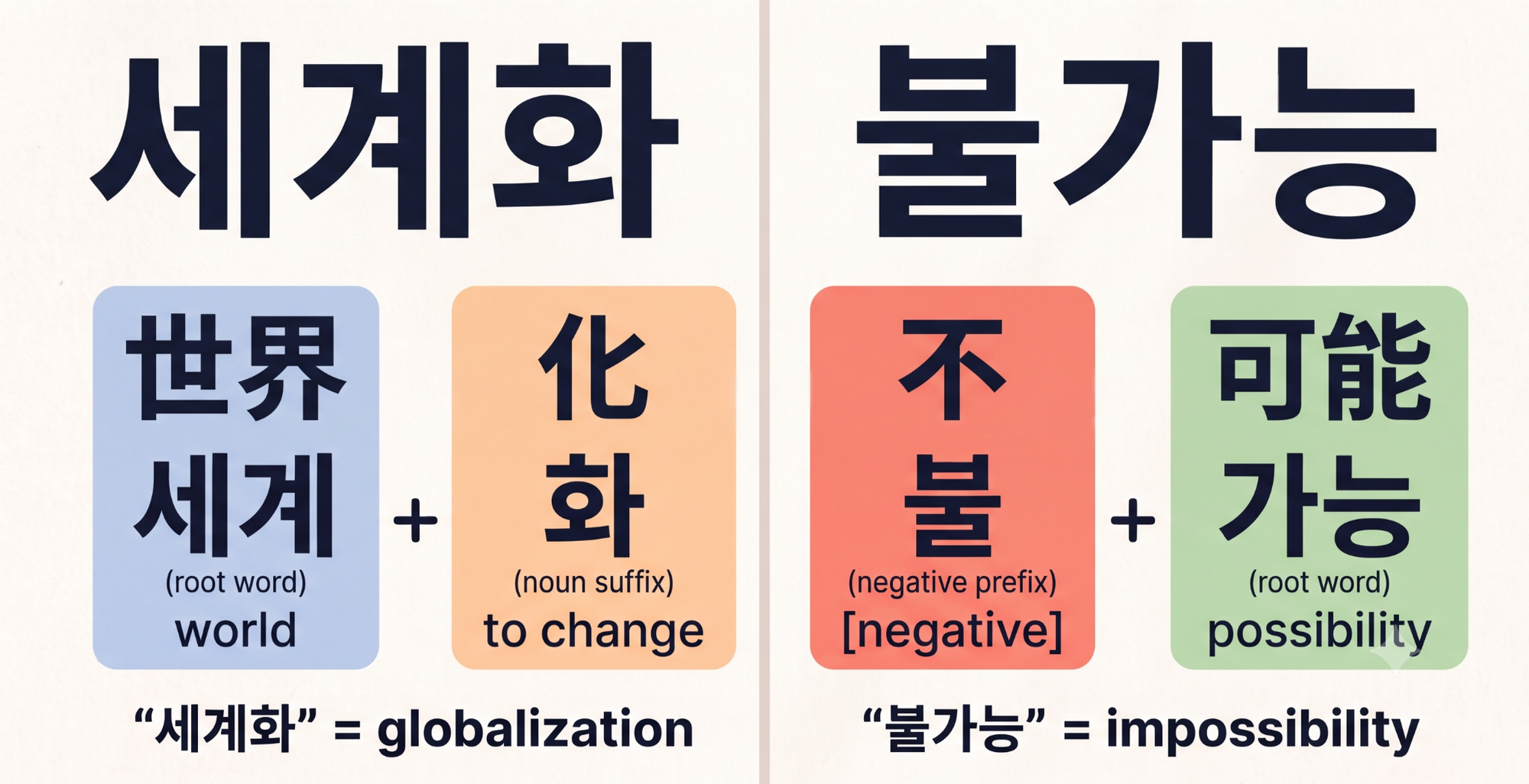
While you don't need to memorize every single character, knowing a few key roots instantly unlocks a ton of new vocabulary. Spotting these familiar parts helps you decode and understand unfamiliar words easily.
[💡Examples]
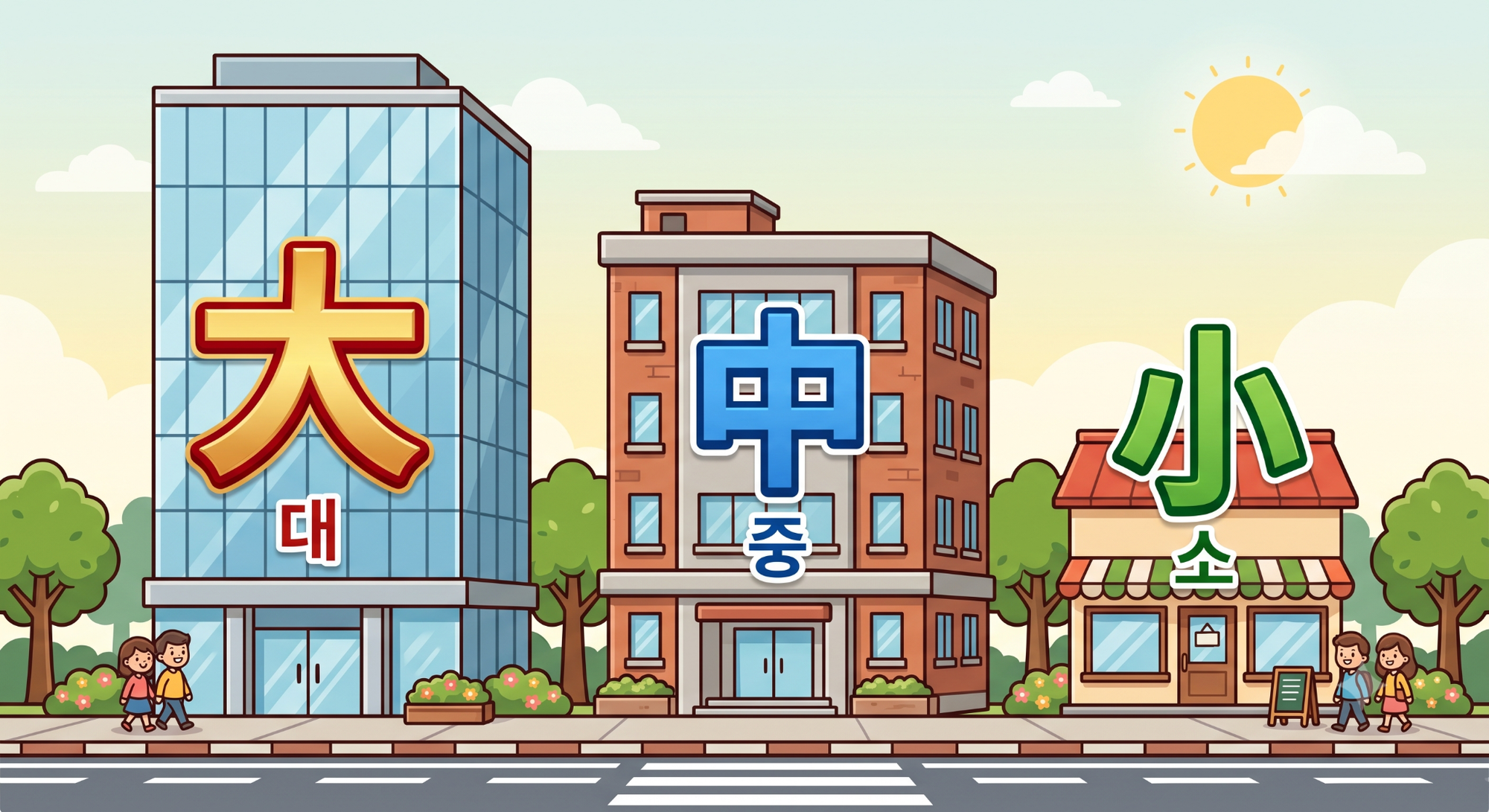
- 大 (대) — Big
- Example: 대가족 (Large family)
- 中 (중) — Medium
- Example: 중간 (Middle)
- 小 (소) — Small
- Example: 소규모 (Small scale)
- 男 (남) — Male
- Example: 남자 (Boy)
- 女 (여) — Female
- Example: 여자 (Girl)

- 門 (문) — Door
- Example: 동대문 (Dongdaemun)
- 出 (출) — Exit
- Example: 출구 (Exit)
- 入 (입) — Entrance
- Example: 입구 (Entrance)
If you want to take your Korean to the next level, consider learning Hanja! 🎯
Get YOUR FIRST HANJA GUIDE here✨.
👤 Meet the Author
Lee Siyeon | TTMIK Content Intern 💼
An American student living in Seoul, exploring the subtle nuances between language and culture. Currently navigating Korean workplace etiquette at Talk To Me In Korean!