[Intern’s Log 📝] More Than Words: The Unwritten Rules of Friendship in Korea
Discover the unwritten social rules and cultural nuances of building genuine friendships as a foreigner in Korea.

[Intern’s Log]
Welcome to our new series! 👋Follow along as our American intern shares authentic first-hand experiences, cultural insights, and Korean language realizations while living in Seoul. 🏙️✨
Making friends in an unfamiliar environment is always intimidating, but navigating friendships across an entirely new culture is a major hurdle for foreigners living in Korea. While individual misunderstandings happen everywhere, the stark contrast between American and Korean cultures adds unique challenges to building friendships.
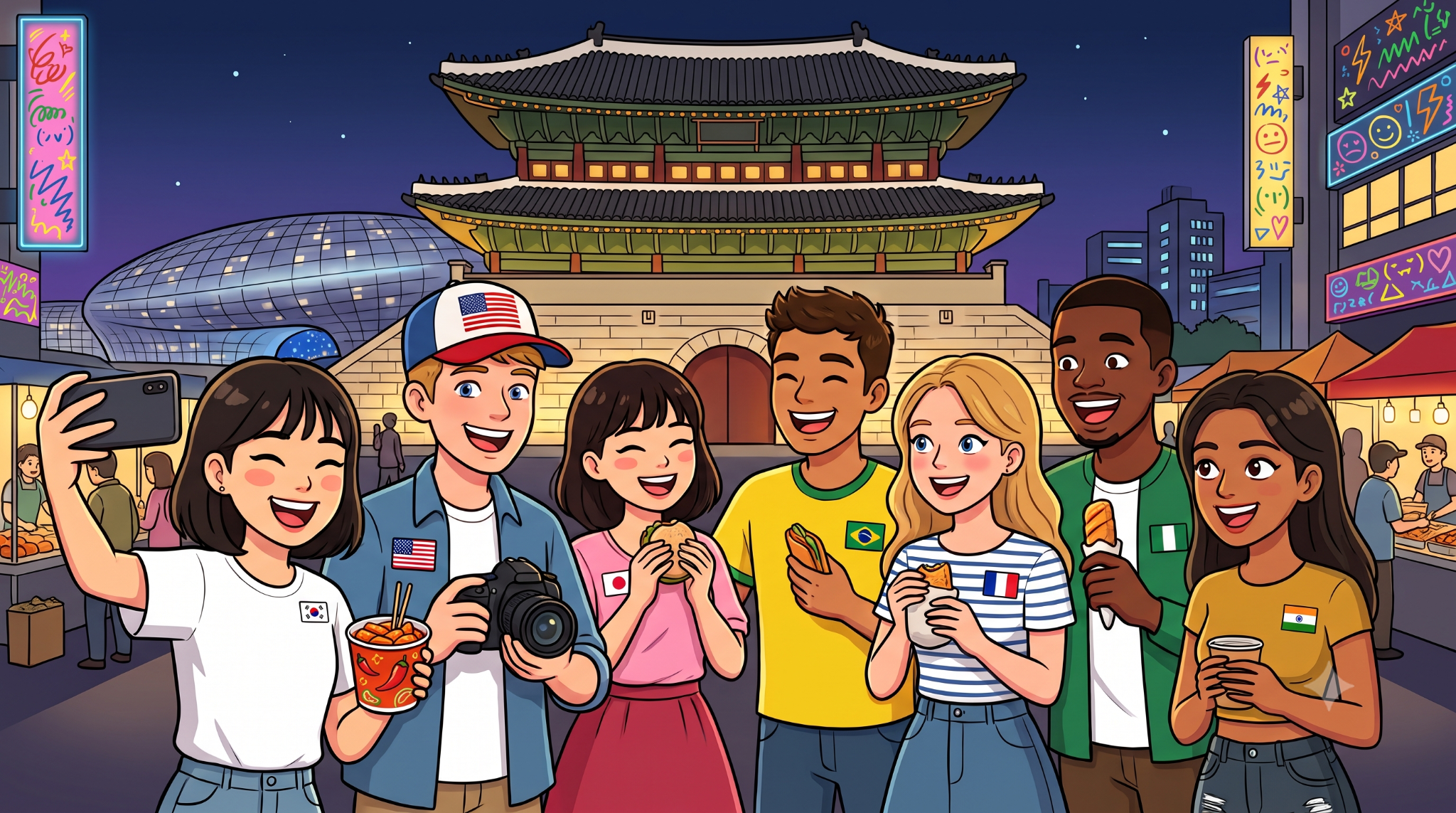
Generated with AI
🙇🏻♀️🤝 Hierarchy and Etiquette in Korea
One important aspect of Korean culture to remember, especially when interacting with Korean people, is the hierarchical system and the etiquette around it. In short, Korean society demands respect for those considered socially 'higher' based on age, professional position, or socioeconomic standing.
- Referring to Someone (호칭- address terms)
- 형 (Older brother- male speaker)
- 누나 (Older sister- male speaker)
- 오빠 (Older brother- female speaker)
- 언니 (Older sister- female speaker)
- ~ 씨 (Polite gender neutral suffix, similar to Mr. or Ms.)
- ~ 님 (Formal gender neutral suffix, similar to Sir or Madam)
While these terms exclusively do not define the closeness of a relationship, the terms come with a general understanding of the distance between you and the other person.
- Speech Level
- 반말 (informal speech style) vs 존댓말 (formal, polite speech style)
This concept of speech levels is entirely foreign to many English speakers, as English lacks a comparable system. In practice, sticking to formal, polite speech is the safest option but not always situationally appropriate. Usually, 존댓말 is used for initial encounters, however, based on context, speakers may eventually transition to 반말. If one speaker is older, they can offer explicit permission to lower their speech by saying “말 편하게 해요” (‘Please speak comfortably.’) or “말 놓으셔도 돼요” (You can lower your speech.’) Conversely, in the case that both speakers are the same age or equals, they can move to 반말 upon mutual agreement.
These linguistic rules highlight the complexity of Korean relationships. Address terms and speech levels constantly shift depending on the person, the situation, and your evolving relationship dynamic. The trickiest part of these concepts is applying it to the real world. As a foreigner, every Korean isn’t going to expect you to be 100% culturally competent but they will appreciate your effort to assimilate. Navigating new friendships involves a constant negotiation between respect through maintaining polite, formal language and eventually dropping honorifics to build a closer connection. While the rules of hierarchy and etiquette may seem daunting at first, embracing them is the most authentic way to show respect and build meaningful bonds in Korean society.
This emphasis on social hierarchy is just one symptom of a much broader cultural framework: Korea's collectivist mindset.
Learn more about the definition of ‘friend’ in Korean.

Generated with AI
🇰🇷🧠🇺🇸Individualism vs Collectivism: Differences in the Korean and American Mindset
Korea's collectivist mindset is evident in many ways, notably in their everyday language. For example, while Americans typically say "my family," Koreans use "우리" —meaning "our"—to describe theirs. The same goes for your workplace, associations, friends, and even family members like “우리 엄마”, referring to ‘my mother’ as ‘our mother’. This dynamic often compels Koreans to keep their personal information private, as so much of their lives is already shared. Conversely, in America’s hyper-individualistic society, many people crave attention and validation about their private lives, often from their close friends.
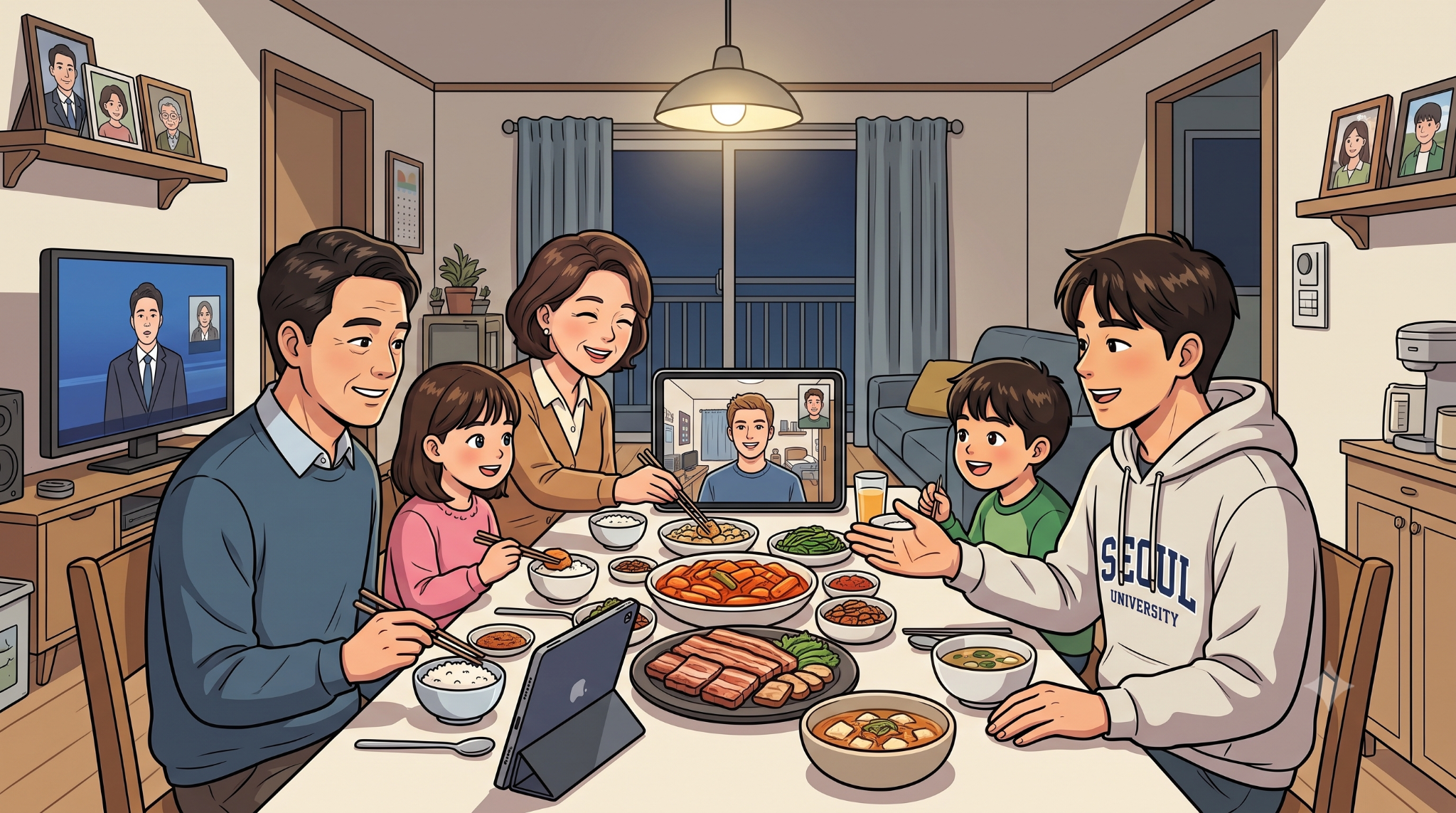
Generated with AI
While definitions of friendship vary, Koreans often experience culture shock when encountering America's highly individualistic approach to relationships and personal autonomy. On the other hand, Koreans often have a strong desire to blend in with the crowd as influenced by their collectivist culture. This concept is so popular that a new slang term appeared specifically describing someone who plays an active role in and fits in well within an organization, ‘인싸’ (literally meaning insider). American friendships often stem from mutual gain and shared interests, whereas the social pressure to be an ‘인싸’ can sometimes make Korean friendships feel rooted in shared responsibility and collective belonging.
These differences in values and thinking can become a point of confusion for foreigners interacting with Korean people or who are trying to function within Korean dominated spaces.

Generated with AI
🌍💛 Finding Connection in a New Culture
Despite knowing and continuing to learn about Korean culture, every new interaction is just as tricky to navigate as the last. The reality of learning a new language is that understanding and accepting the corresponding culture is non-negotiable. Despite the inevitable hardship that comes with navigating a new language and culture, it is incredibly rewarding to be able to make connections across these various barriers.
👤 Meet the Author
Lee Siyeon | TTMIK Content Intern 💼
An American student living in Seoul, exploring the subtle nuances between language and culture. Currently navigating Korean workplace etiquette at Talk To Me In Korean!