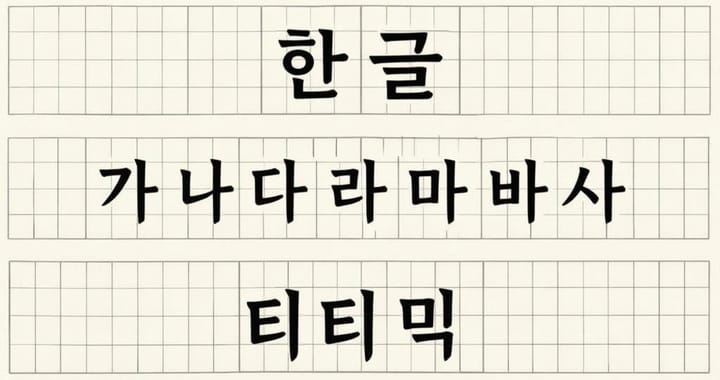
What is Hangeul?
Hangeul is the writing system used in Korea. This system is a great tool to acquire as it is unique to Korea and not used by any other nation in the world. By learning the Korean alphabet, you will be able to improve your Korean language skills in all areas.

In total, there are 28 characters within the Korean alphabet. Here, we will break down the structure of Hangeul:
Alphabet Structure
The Hangeul writing system includes 24 characters made up of vowels and consonants. When the writing system was first created, three character shapes were developed to allow people of all classes to easily learn how to read and write.
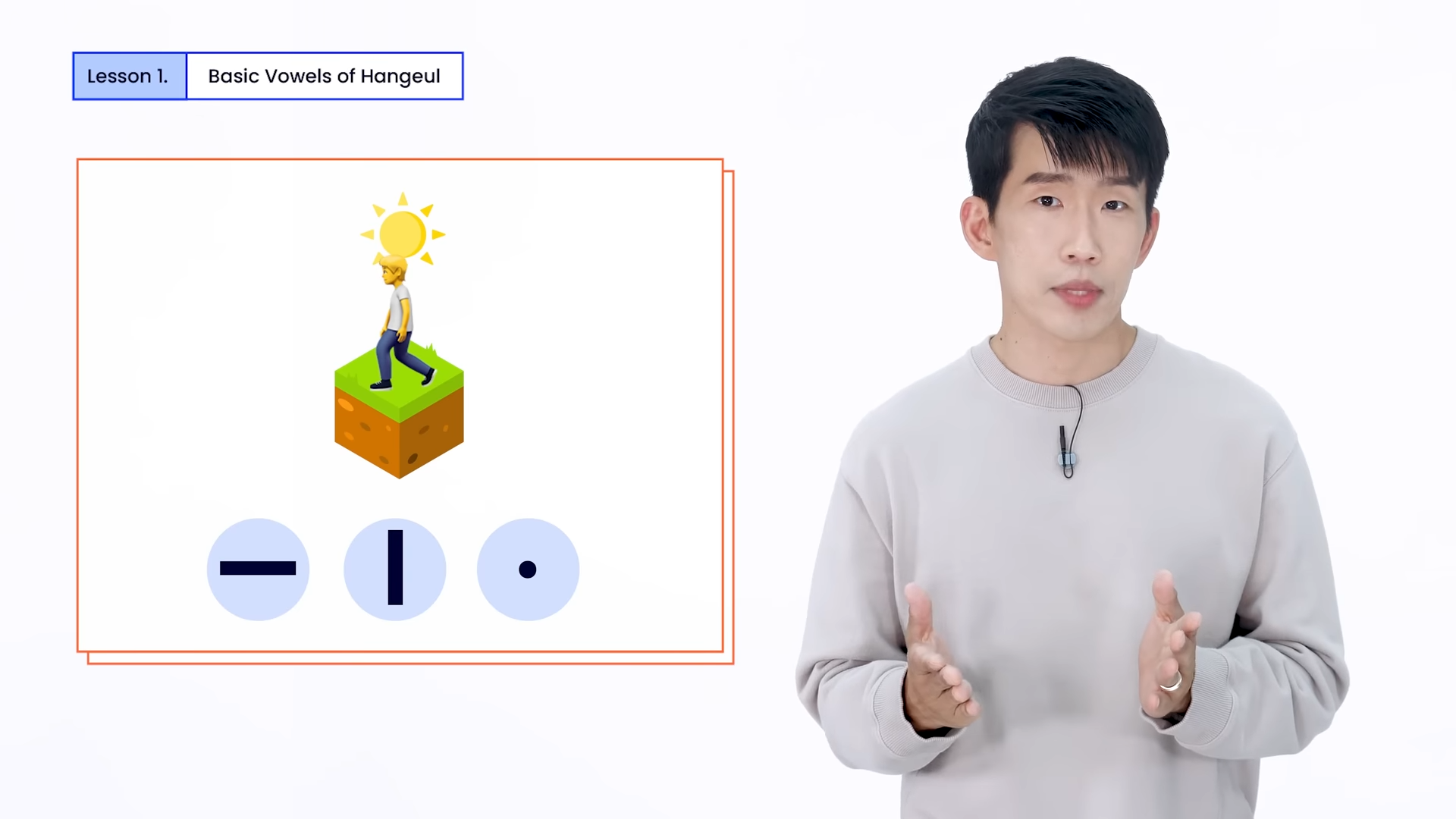
- The horizontal line represents earth
- Dots represent the sky
- The vertical lines represent humans
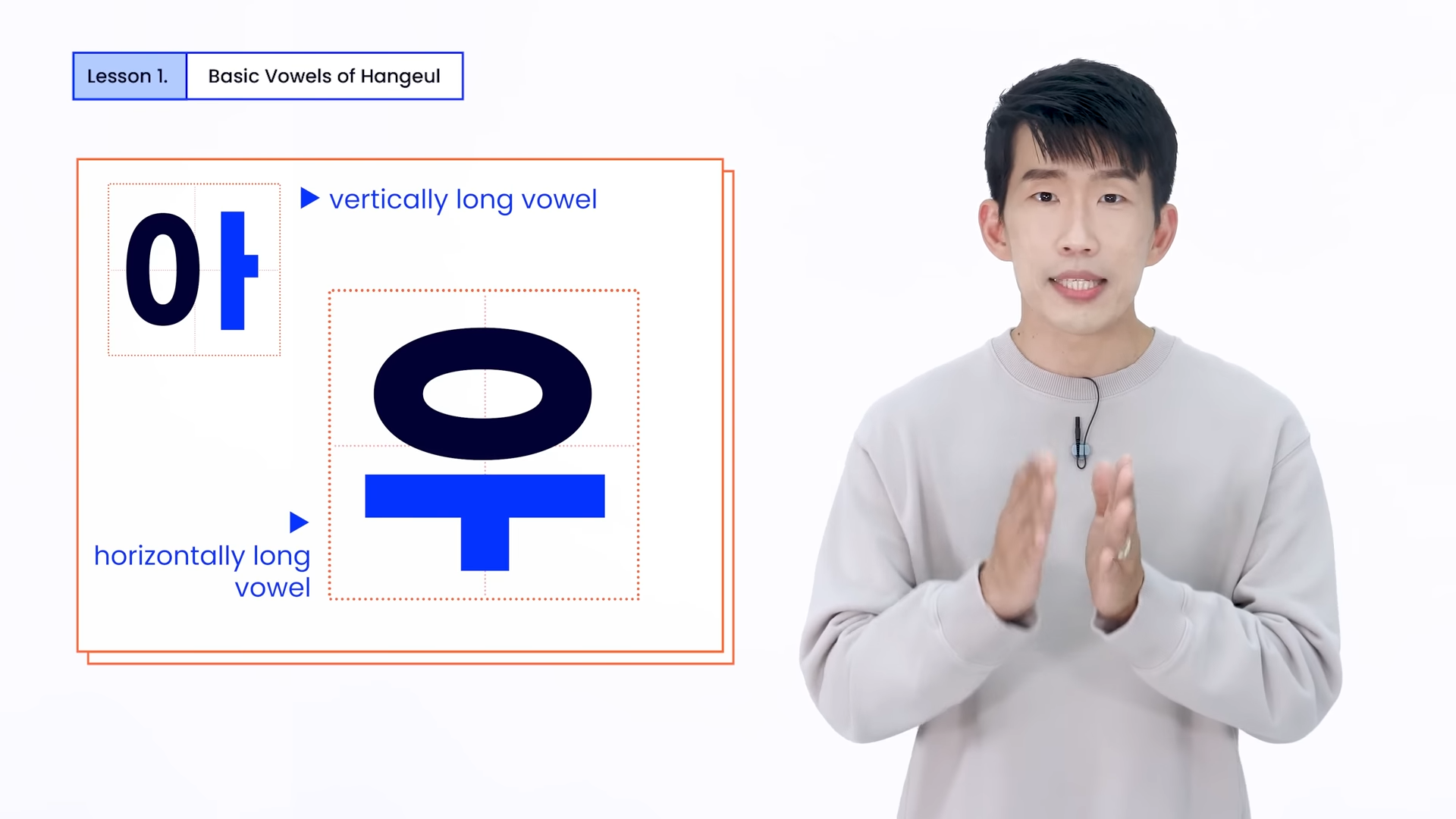
In modern Hangeul, we see the dots more commonly written as a small attached line. We see that Hangeul was created so that each letter fits within a box. Even as characters become more complex, this format stays true.
For this video, we start slowly and cover 6 basic vowels and 1 consonant.
It’s important to learn one step at a time when studying a new language so that you can fully grasp the material.
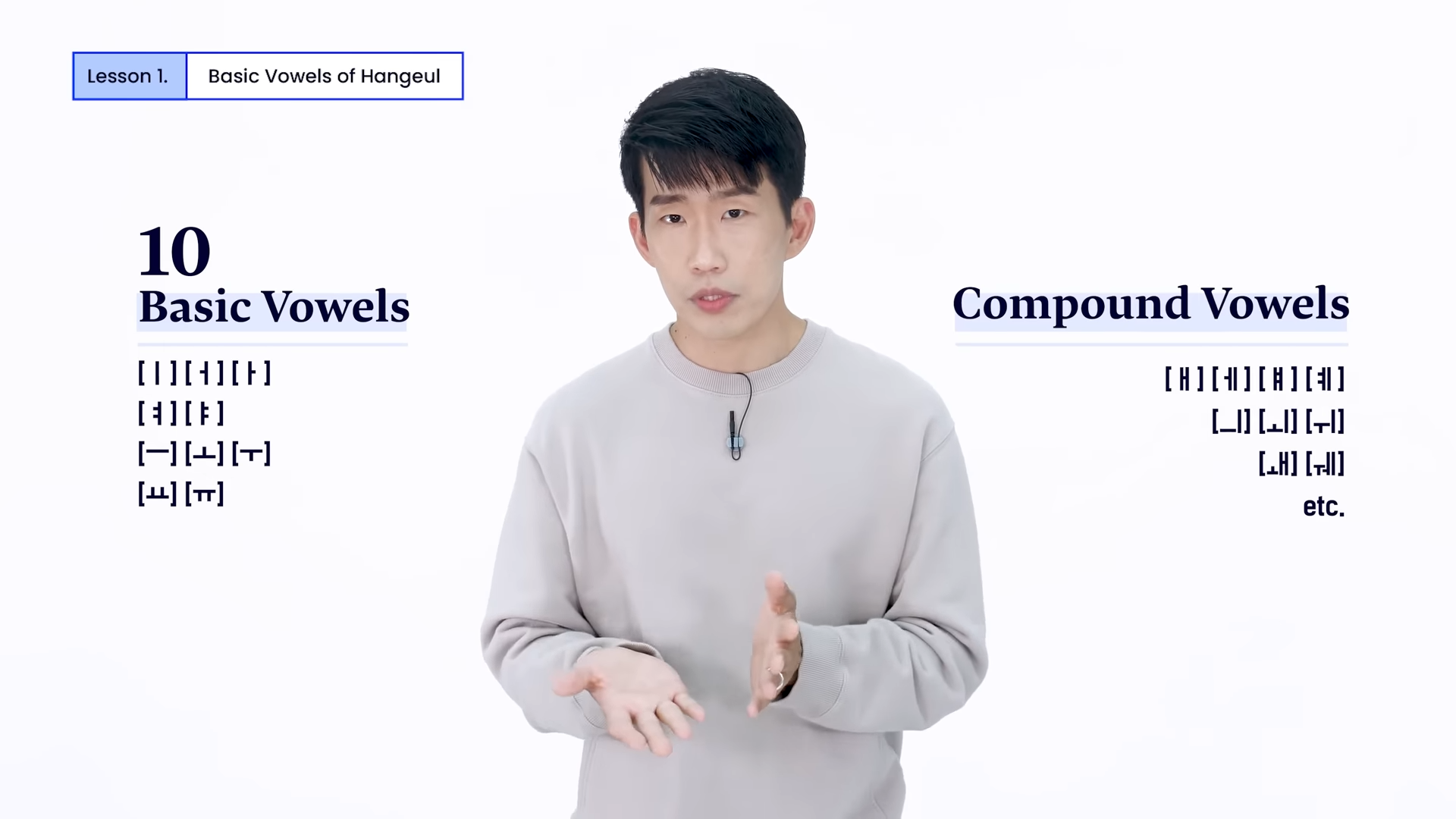
Vowels
The first basic vowel we will learn is “ㅡ” which doesn’t have a direct English translation, but when spoken,, sounds similar to “euhg.”
The next basic vowel is “ㅣ” which makes a sound similar to “eee.”
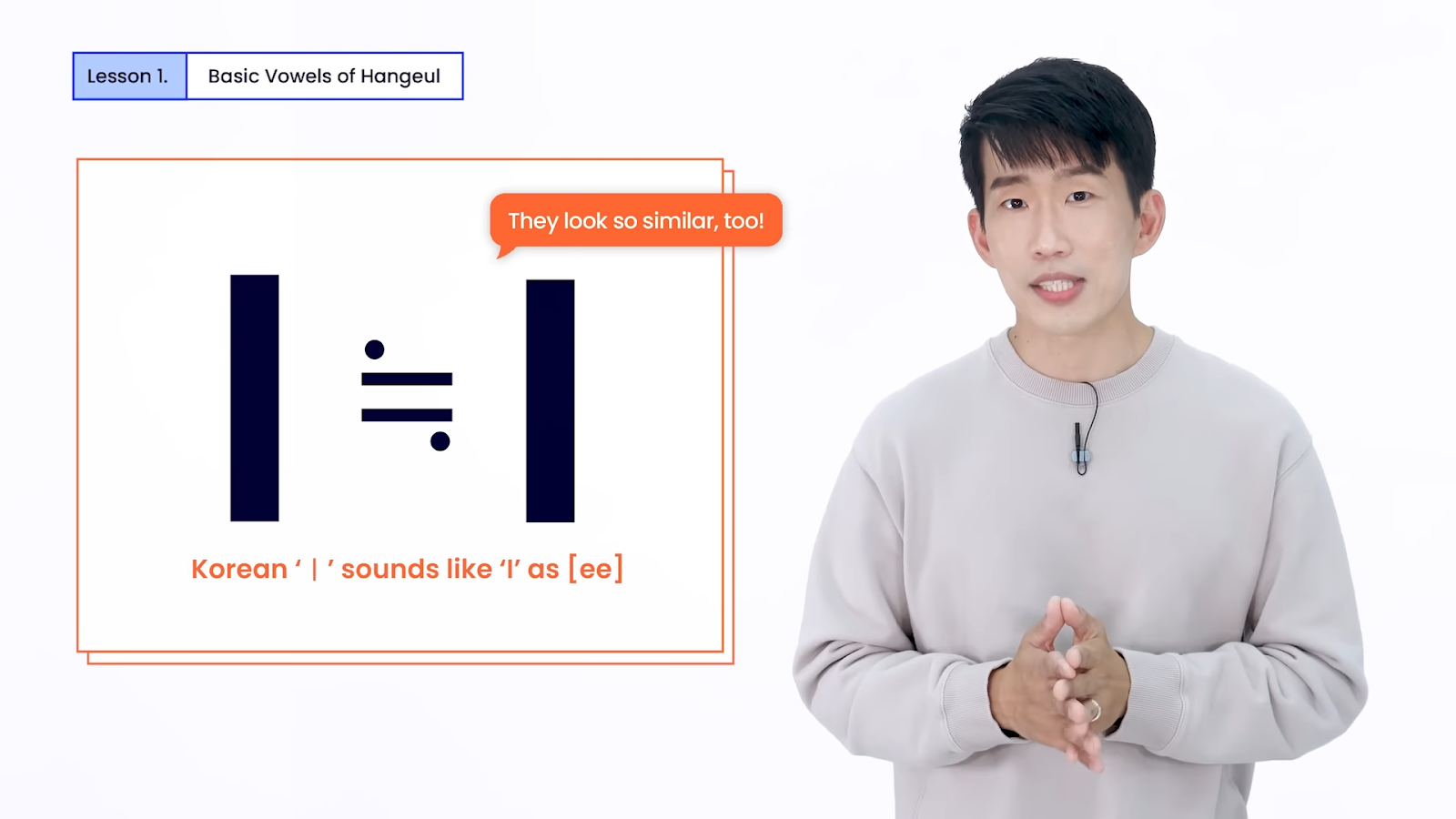
When we combine these basic vowels with other vowels such as “ㅁ”, we can see more complex sounds created. While “ㅁ” makes the sound “meh” similar to the English letter m, but with the lips closed, when combined with “ㅡ”, we hear the sound “meuhg” created.
These first two vowels are the base for many complex vowels that we will learn in later lessons.
Taking the same bases as the first vowels we started with, these next vowels are where we see the addition of a dot (modern small line).
- “ㅗ” makes the sound “oh.”
- “ㅜ” makes the sound “ooo.”
The next set of vowels also contains a dot:
- “ㅓ” makes a sound like “auh.”
- “ㅏ” creates the sound “ah.”
Listen closely to these two to hear the subtle difference.
Consonant
The final letter we will learn in this lesson is the consonant “ㅇ.”
- It makes no sound and is a placeholder.
- While it does not change the sound, it is often combined with vowels.
Examples:
- “오” = ㅇ + ㅗ (oh)
- “우” = ㅇ + ㅜ (oo)
- “어” = ㅇ + ㅓ (auh)
- “아” = ㅇ + ㅏ (ah)
We can see that the circular consonant shifts to fit within the box, but the vowel’s sound remains unchanged.
Hangeul Practice Guide
Whether this information is new to you or you’re reviewing your skills, take time to pace yourself on your language learning journey.
While Hangeul can be easier for some beginners, there are different paces at which everyone learns. The creator of Hangeul himself stated:
“A wise man can learn Hangeul in a morning, an unwise in the span of 10 days.”
While you are not unwise if this takes some time to grasp, remember to give yourself grace when learning.
To help memorize the content you’ve just learned:
- Rewatch the video and pronounce each letter aloud.
- Practice writing each letter to improve your skills.
👉 If you would like to learn more, follow our Hangeul series on YouTube!