Why is speaking Korean so hard for me?
Save this video and use it anytime you’re preparing for a Korean test, a trip, or a chat with native speakers!
Why is speaking Korean so hard for me?
The Real Reason Korean Conversation Feels Awkward at First
Have you ever thought, “I’ve been studying Korean, so why is speaking Korean so hard for me? when I start talking?”
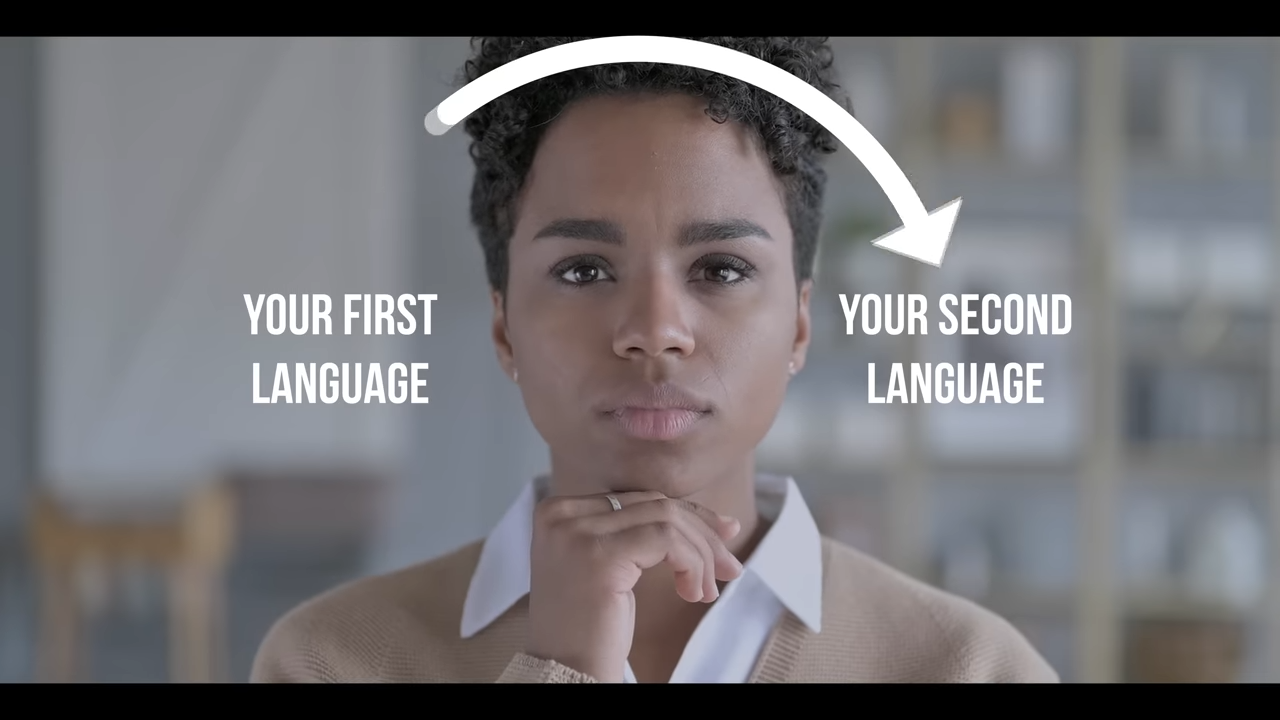
Your native language is automatic. You don’t think about grammar, word order, or pronunciation. Your thoughts flow straight into speech.
When you start a conversation in second language, your brain may still be “thinking” in your native language. This means you’re translating each thought into Korean before speaking and that mental translation takes time. That’s why your first few sentences might feel more challenging.
After you have engaged in conversation for a while, something amazing happens: your brain realizes the conversation is happening in your second language. Once that switch flips, it starts processing directly in Korean, and the words begin to flow much more naturally.
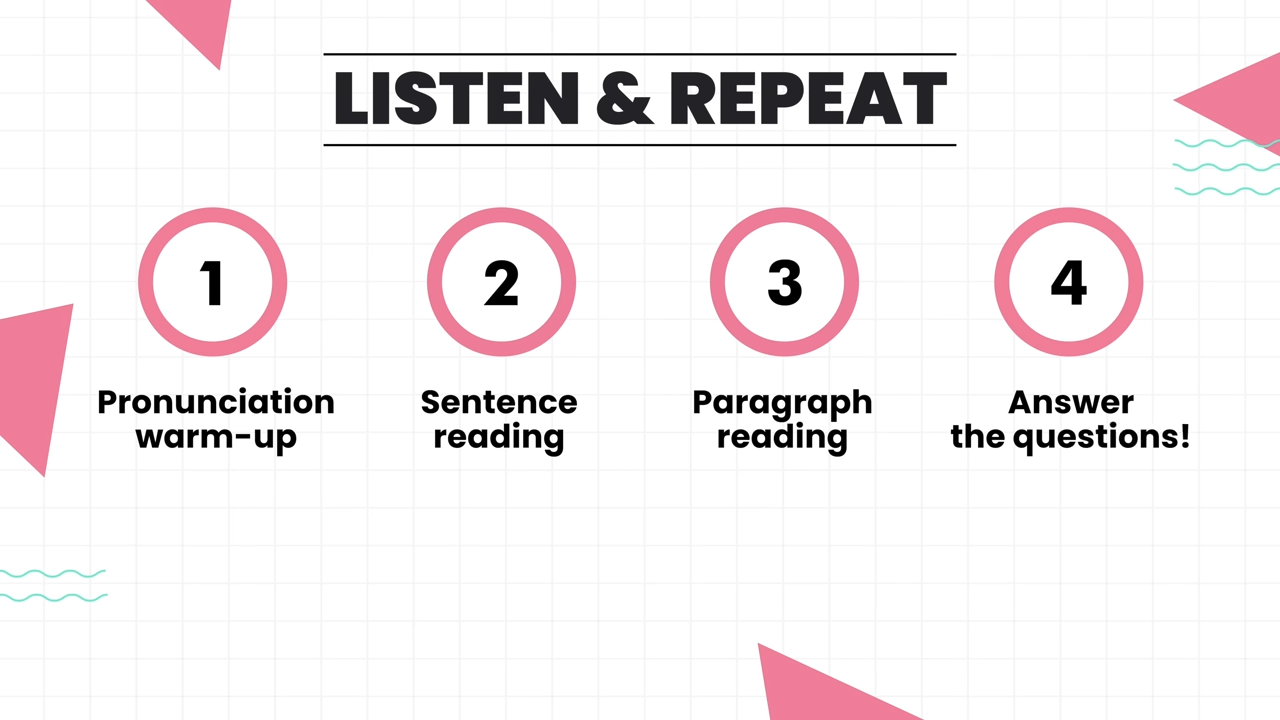
Let’s Practice: Your Korean Pronunciation & Speaking Warm-Up Guide 🎙️
🎧 1. Pronunciation Warm-Up (Start at 1:12)
The first set of practice examples is a pronunciation guide.
Follow along with Yeji, and try this method to practice:
✅ Pause after each example and pronounce it before hearing Yeji’s version.
✅ Record yourself twice: once before, and once after hearing the correct pronunciation.
✅ Compare your recordings to Yeji’s voice to identify differences in tone, rhythm, and mouth shape.
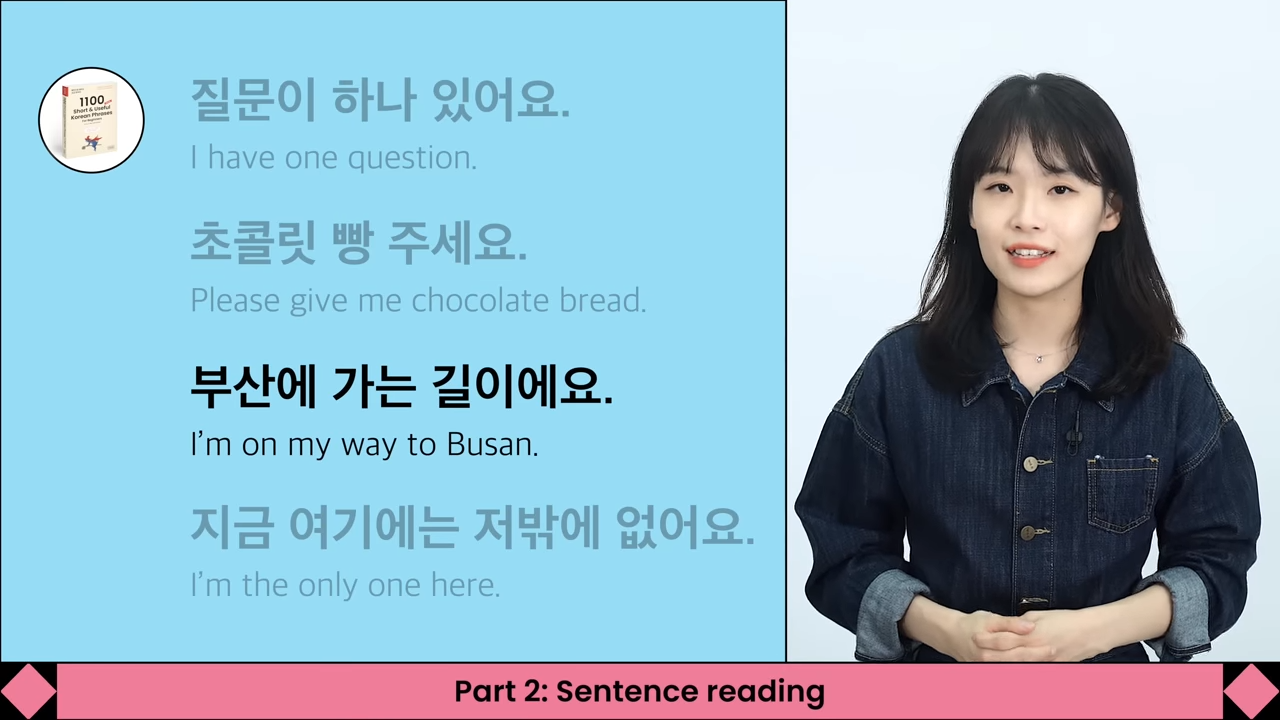
📖 2. Practice Reading Sentences (Start at 2:46)
Next, we move on to sentence reading practice.
This section helps you build rhythm, flow, and confidence when reading Hangeul.
Follow these steps:
1. Focus on the Korean (Hangeul) instead of the English translation.
2. Pause after each sentence and read it aloud yourself.
3. Record and listen before hearing Yeji’s pronunciation and then compare your version.
🗣️ 3. Practice Paragraph Reading (Start at 3:53)
Ready to take it up a notch?
This section is about reading full paragraphs in Korean — just like a native speaker telling a story.
Listen carefully to Yeji as she reads and pay attention to her:
- Voice inflection (how her tone rises and falls)
- Pacing and emotion (which make her speech sound natural)
Then, try reading the paragraph aloud yourself with feeling!
Record your version and compare it with Yeji’s delivery to see how your intonation and rhythm differ.
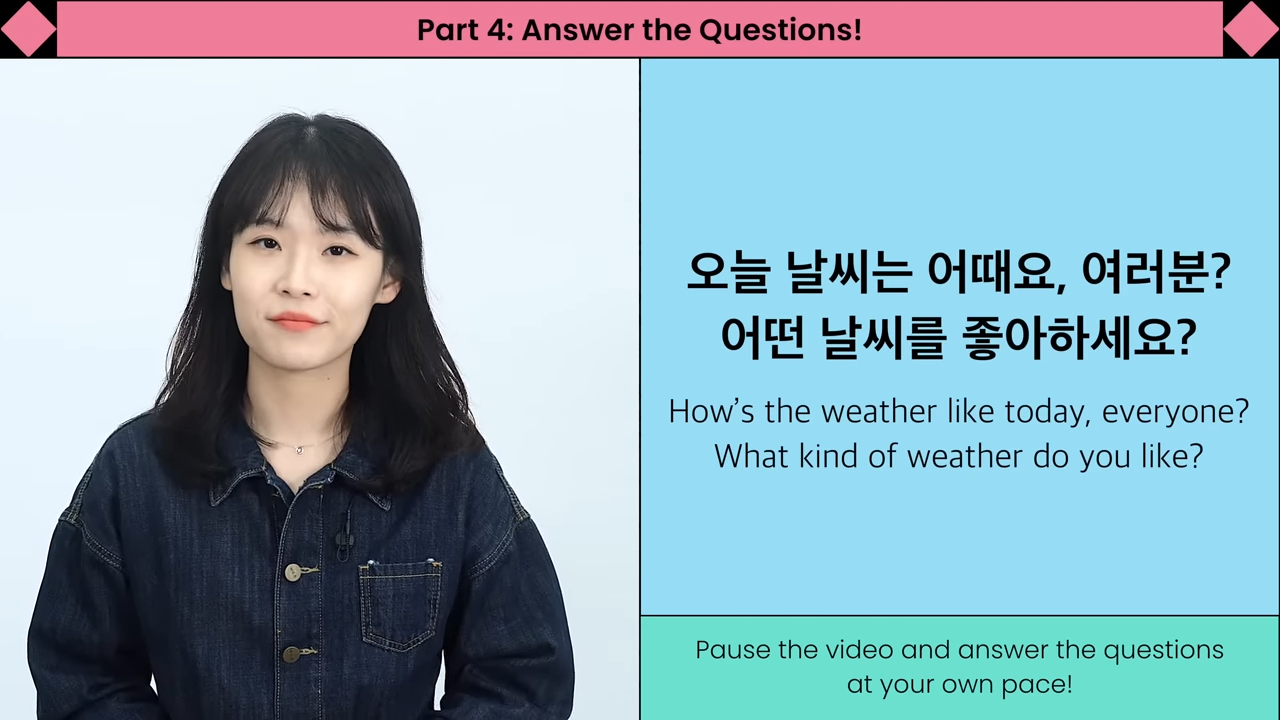
💬 4. Answer the Questions (Start at 5:19)
Finally, it’s time to answer real questions in Korean. In this section, Yeji will ask you several questions. Here’s how to make the most of it:
- Pause after each question and respond aloud.
- Don’t stop at short answers — expand your response naturally, just like you would in conversation.
- Try recording your answers to evaluate how smooth and confident you sound.
Try asking the questions yourself as you might use them in your next conversation!
Warm Up Your Korean Brain Before You Speak 🇰🇷
Learning a new language takes time — and that’s okay!
Because you didn’t grow up speaking Korean, challenges are natural. The key is to be kind to yourself as you learn.
Before you start a conversation, take a few minutes to warm up your second-language brain. This quick practice helps you feel more confident and speak more smoothly.
Want to practice more?
Find the perfect learning tools, from comprehensive courses to interactive apps,
all customized to fit how you learn best. Our resources are designed by experienced teachers who’ve guided countless learners down this same path. We blend solid teaching with a lighthearted approach, so you’ll find yourself having fun while actually making progress.