👨👩👧👦 The Seollal Survival Guide to Korean Family Terms (Without the Headache)
Seollal is just around the corner in Korea (Feb 16–18)!
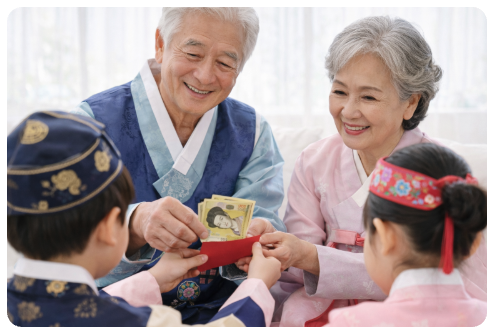
Seollal (설날) is the holiday when families gather, do New Year’s bow (세배), and eat together. So, you’ll hear a lot of family titles flying around. Korean family terms can feel confusing because they don’t just mean “aunt/uncle/cousin.” They often depend on:
- Which side of the family (mom’s vs. dad’s)
- Relative age (older vs. younger)
- Your relationship to the person (who’s speaking matters!)
The good news: you don’t need every distant relative term to sound natural. If you master the “high-frequency” ones below, you’ll understand most Seollal conversations right away.
👨👩👧👦 How to choose the right family title in 3 steps
- Start with your position
Are you speaking as the child, the spouse, or the sibling? (Korean terms are speaker-centered.) - Check the family side
- Dad’s side = paternal (부계)
- Mom’s side = maternal (모계)
- Check age (older/younger)
Korean loves clarity: older vs. younger relatives often have different titles.
👨👩👧👦 The frequently-used Korean Family Terms
A. Immediate family 👫
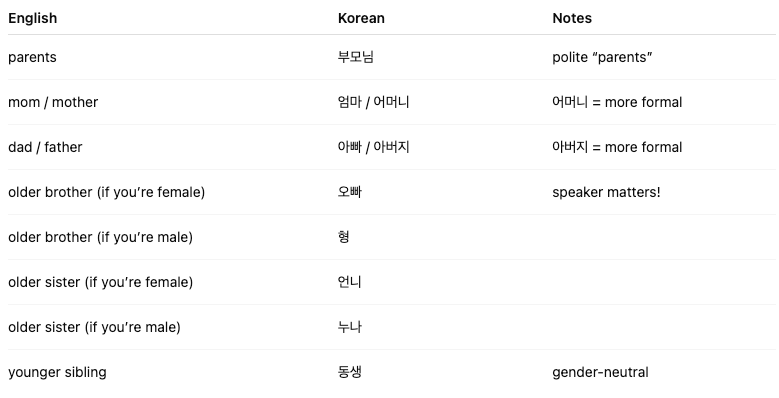
Example:
- “어머니, 새해 복 많이 받으세요!” (Mother, Happy New Year!)
- “형, 세배 드렸어?” (Hyung, did you do the New Year’s bow?)
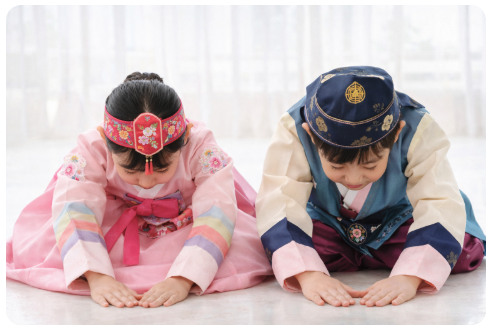
B. Grandparents 👵 👴
- 조부모님 = grandparents
- 할머니 = grandmother
- 할아머지 = grandfather
Example:
- “할아버지, 세배 드릴게요.” (Grandpa, I’ll do the New Year’s bow.)
C. Aunts & Uncles 🙆♀️ 🙆♂️
Instead of one word for “aunt,” Korean often specify mom’s side vs dad’s side.
Dad’s side
- 큰고모 = dad’s older sister (aunt)
- 작은고모 = dad’s younger sister (aunt)
- 고모부 = husband of aunt(dad's sister)
- 큰아버지 = dad’s older brother (uncle)
- 작은아버지 = dad’s younger brother (uncle)
- 숙모 = paternal uncle’s wife
Mom’s side
- 이모 = mom’s sister (aunt)
- 이모부 = husband of aunt(mom's sister)
- 외삼촌 = mom’s brother (uncle)
- 외숙모 = maternal uncle’s wife
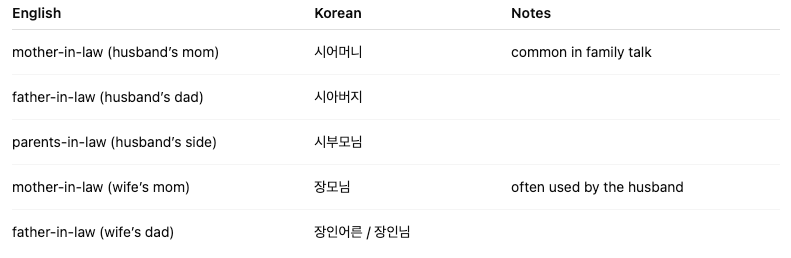
D. In-laws (useful if you’re married—or watching K-dramas 😄)
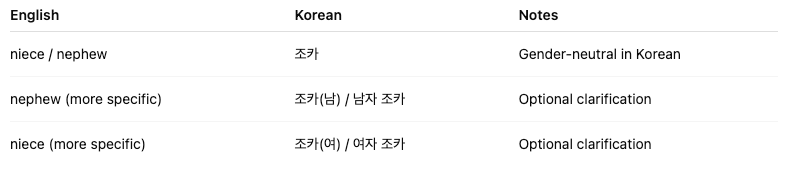
E. Cousins, Nephews & Nieces 👶

FAQ: Quick answers learners always ask
Q1) Why does Korean have so many family terms?
A) Because Korean family culture often values clear relationship mapping: side of family + age hierarchy + closeness.
Q2) Can I just say “삼촌/이모” for every aunt/uncle?
A) In casual contexts, many people do use 삼촌/이모 broadly (especially with kids). But in actual family talk, 고모/이모/큰아버지/작은아버지/외삼촌 show you really understand who’s who.
Q3) What if I say the wrong term?
A) Don’t panic—Koreans know this is tricky. A quick “아, 헷갈렸어요!” (Ah, I got confused!) is totally fine. Then repeat the correct term once and move on.
Q4) What should I learn first for Seollal?
A) Start with: 부모님, 할머니/할아버지, 오빠/형/언니/누나/동생, 이모/고모, 큰아버지/작은아버지, 사촌.
👨👩👧👦 Happy Seollal!
Korean family titles can look overwhelming at first, but you’ve got this. Just remember the three keys: who’s speaking, which side of the family, and who’s older.
This Seollal, try using Korean titles for your relatives, starting with the basics.
It’ll feel natural sooner than you think!
Learn exactly what you need
at your own pace!
Choose lessons by level or topic, and shape a learning path that fits you.
From real-life conversations to natural pronunciation, boost your Korean skills and feel your Korean confidence rise with TTMIK's carefully curated curriculum.