Korea, the Country of Hagwons (Private After-School Academies)
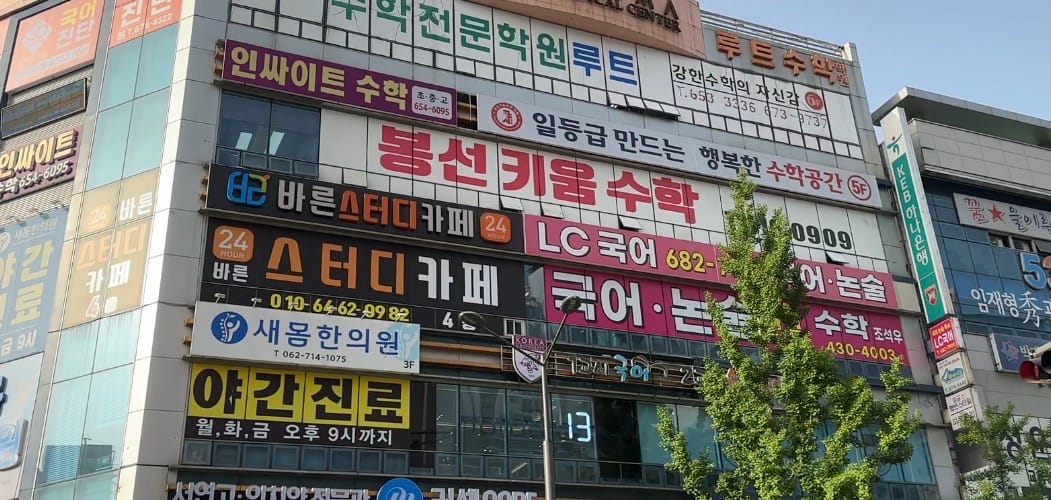
안녕하세요! Hyunwoo here. If you spend some time in Korea, especially if you have children, or friends who are parents, you will quickly notice one thing.
There are hagwons everywhere.
A hagwon (학원) is a private after-school academy, and there seems to be one for everything: math, English, Korean, science, piano, swimming, basketball, skateboarding… I’ve even seen jump rope hagwons.
Yes, jump rope!
For many people outside Korea, this is surprising. And very often, the first reaction is negative. But I think the reality is more complicated than that.
The Good Side of Hagwons
Personally, I don’t think hagwons are inherently bad. One clear advantage is structured learning.
If you want your child to learn something in a systematic way, hagwons can be very effective. And if you choose well, they can be relatively affordable and time-efficient. I’ve sent my own children to swimming, art, and piano lessons, and they currently also go to a basketball hagwon once a week. Honestly, I’m very happy with that choice.
They spend their afternoons doing something active, fun, or creative with experienced teachers and other children, and they enjoy their time. As parents, my wife and I have a little more time for our own personal activities, and then we all meet at home for dinner and spend our evenings together as a family.
In that sense, hagwons can often be a win-win for everyone.
Where the Problems Start
That said, there are some serious issues, and I usually think of them in three main categories.
First, schedules can become very full.
Many young children attend multiple hagwons, and each one gives homework. When you add everything up, kids often end up sleeping less than they should. For young children, that’s not a small problem.
Second, social pressure makes parents enroll their kids in too many hagwons.
Ideally, parents would choose hagwons wisely based on their child’s interests or needs. But in reality, their decisions are often influenced by what other families are doing, or by a fear of falling behind.
And third, the biggest issue of all is the obsession with “learning ahead of grade level”.
It’s called 선행 학습 [seon-haeng hak-sseup] in Korean and it refers to studying things ahead of what is taught at school.
For example, it’s not unusual for a fifth grader to be studying middle school material already. As a result, some schools assume that students have done this kind of pre-learning through private study.
And yes, there are even hagwons that exist just to prepare children to enter other more famous hagwons that specialize in studying ahead. So we can call them “pre-pre-learning hagwons” maybe?
When you step back and look at the whole picture, the situation can feel really absurd.
A Very Korean Reality
Realistically speaking, hagwons are not going away anytime soon. They are deeply embedded in Korean society and will probably remain so for at least a couple of decades.
And you can’t really look at the whole hagwon industry as something evil that only pressures or exhausts children, because when you choose thoughtfully, hagwons can offer children a safe and comfortable environment where they’re exposed to a variety of activities (academic, physical or creative) in a fairly balanced way.
The only part that concerns me is the emphasis on studying far ahead of grade level. Ideally, it’s something everyone should slow down on. Realistically, however, that’s unlikely to happen anytime soon.
I hope that parents spend more time talking with their children, listen to what they actually want to learn, and use hagwons as one option among many, rather than a default path.