Q&A: What gender do you use -아, -야, -이 after?
We recently received a question on YouTube:
“Do the endings -아, -야, -이 change depending on gender?”
👉 The answer is no — these endings are NOT determined by gender.
What actually determines which ending you use is:
- Whether the Korean name ends with a vowel or a consonant
- Whether you speak in casual language (반말) with that person
For example, 현우’s name ends with a vowel, so you would use -아 (현우아). However, this ending is only natural if you have a close, casual relationship with him. If a colleague were to use -아 with someone like 현우, it could sound awkward or even rude, because -아/-야/-이 are used only in 반말.
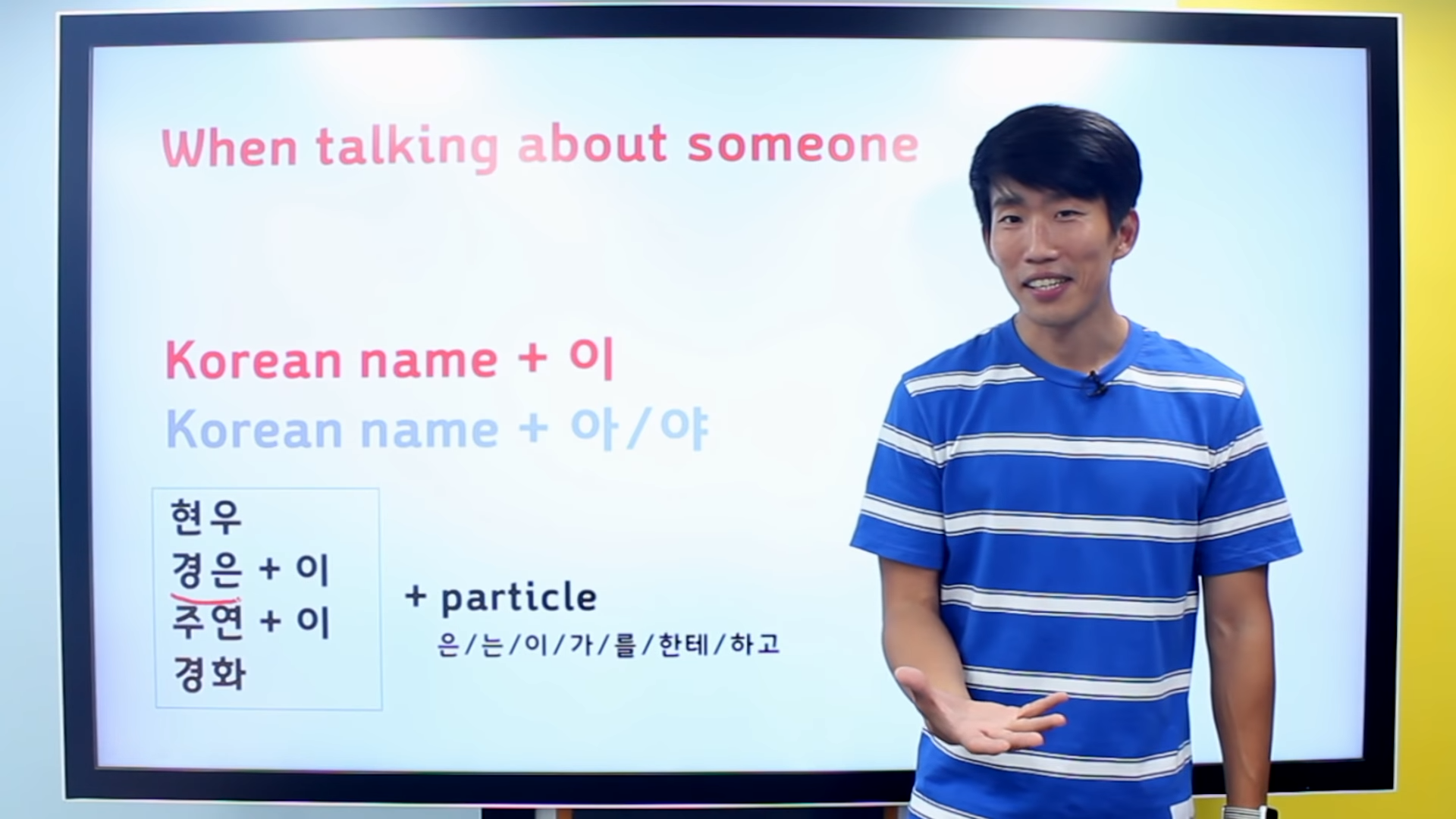
✅ When to use -이
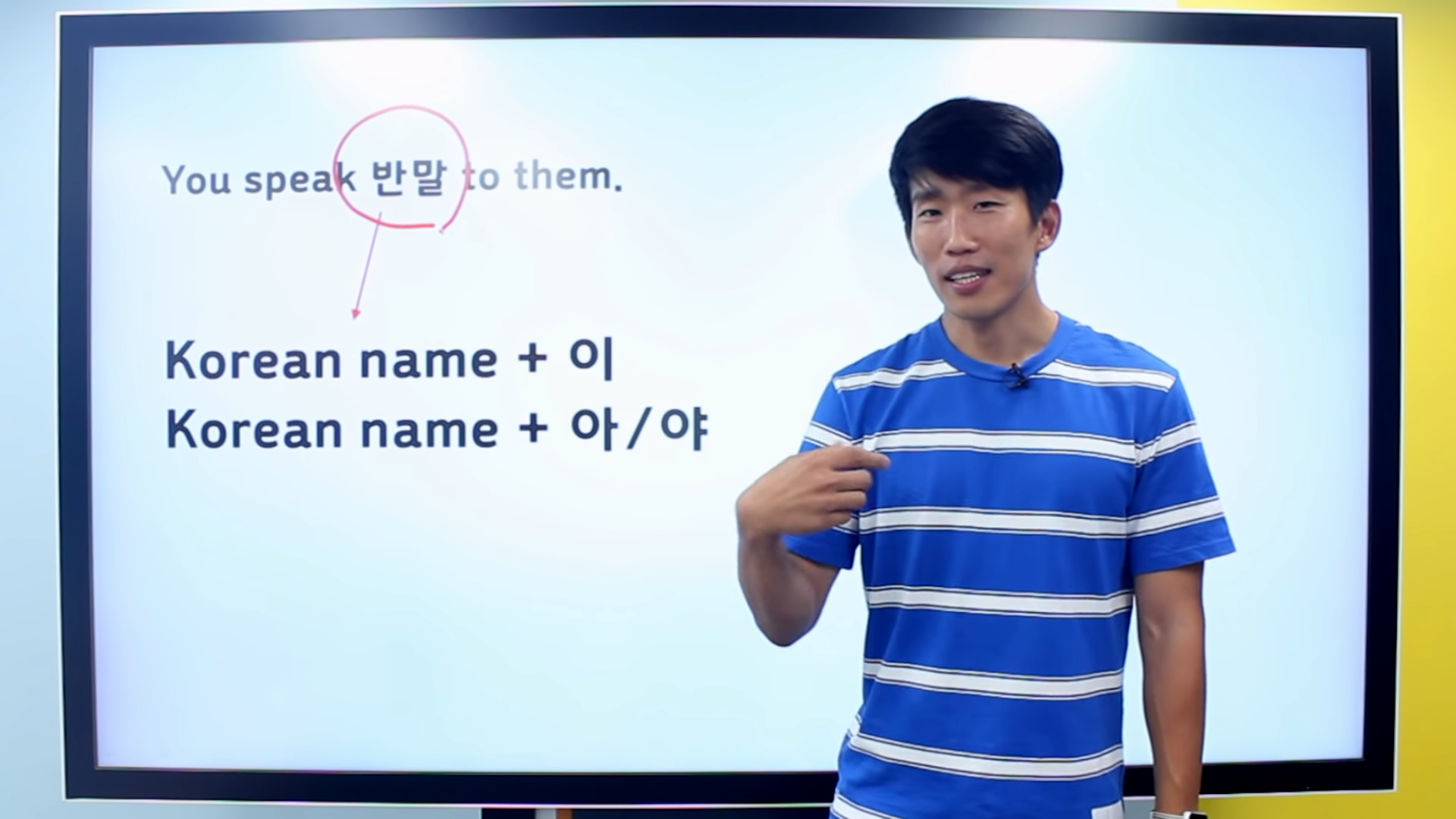
Use -이 when referring to someone you normally speak casually with.
Even if you are using formal speech with the listener during the conversation, it’s okay to attach -이 to your friend’s name if you normally use 반말 with that friend. In this case, the name + -이 is typically followed by a subject marking particle.
If the listener does not know that person well, they will respond using a more formal form of the name instead of -이.
✅ When to use -아 / -야
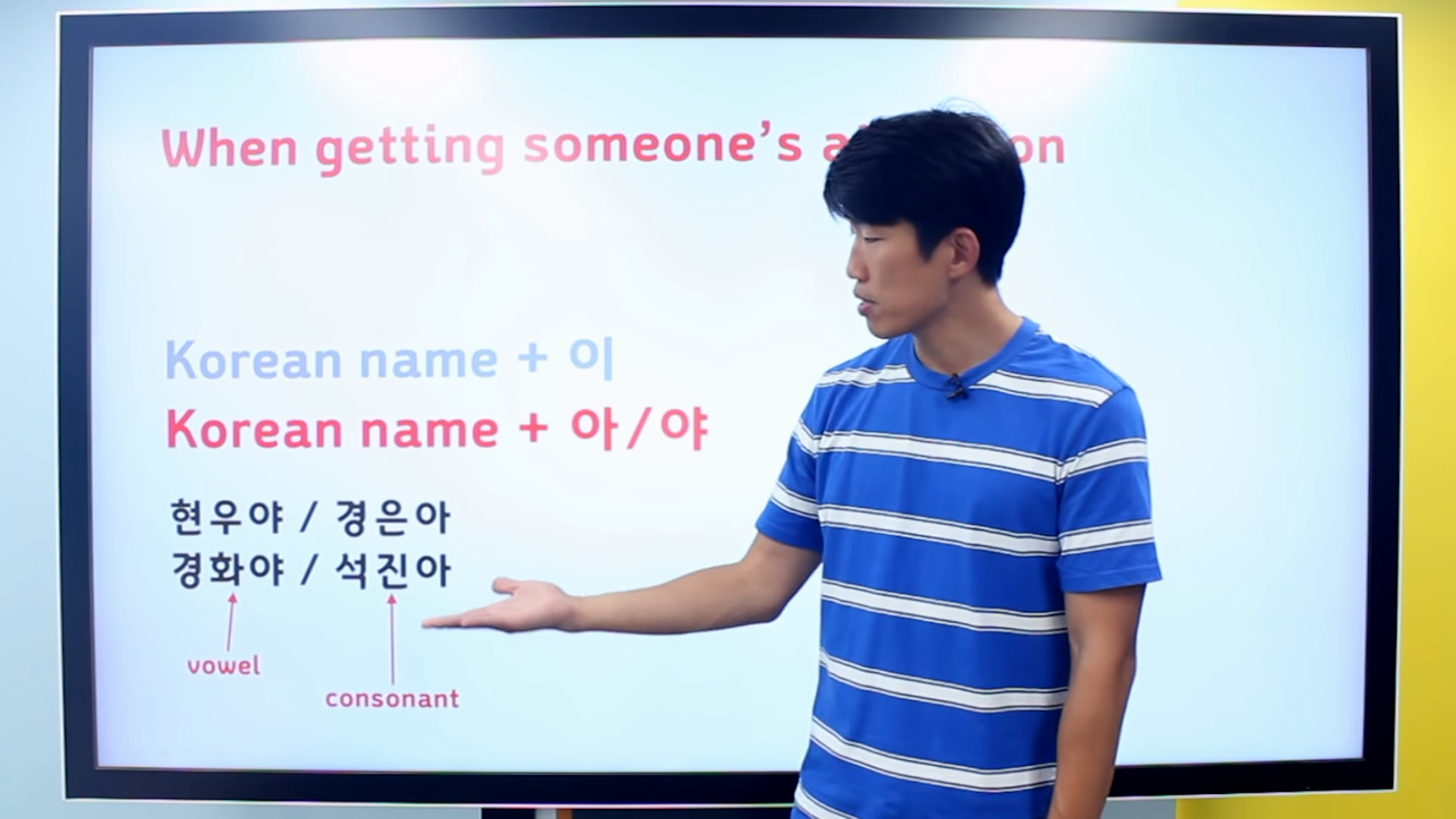
These endings are mainly used to call someone’s name or get their attention.
- If the name ends in a vowel → use -야
예: 현우 → 현우야! - If the name ends in a consonant → use -아
예: 민석 → 민석아!
But keep in mind:
Even when getting someone’s attention, using this ending is not considered respectful towards someone older or in a higher position.
✅ Exceptions: Foreign Names
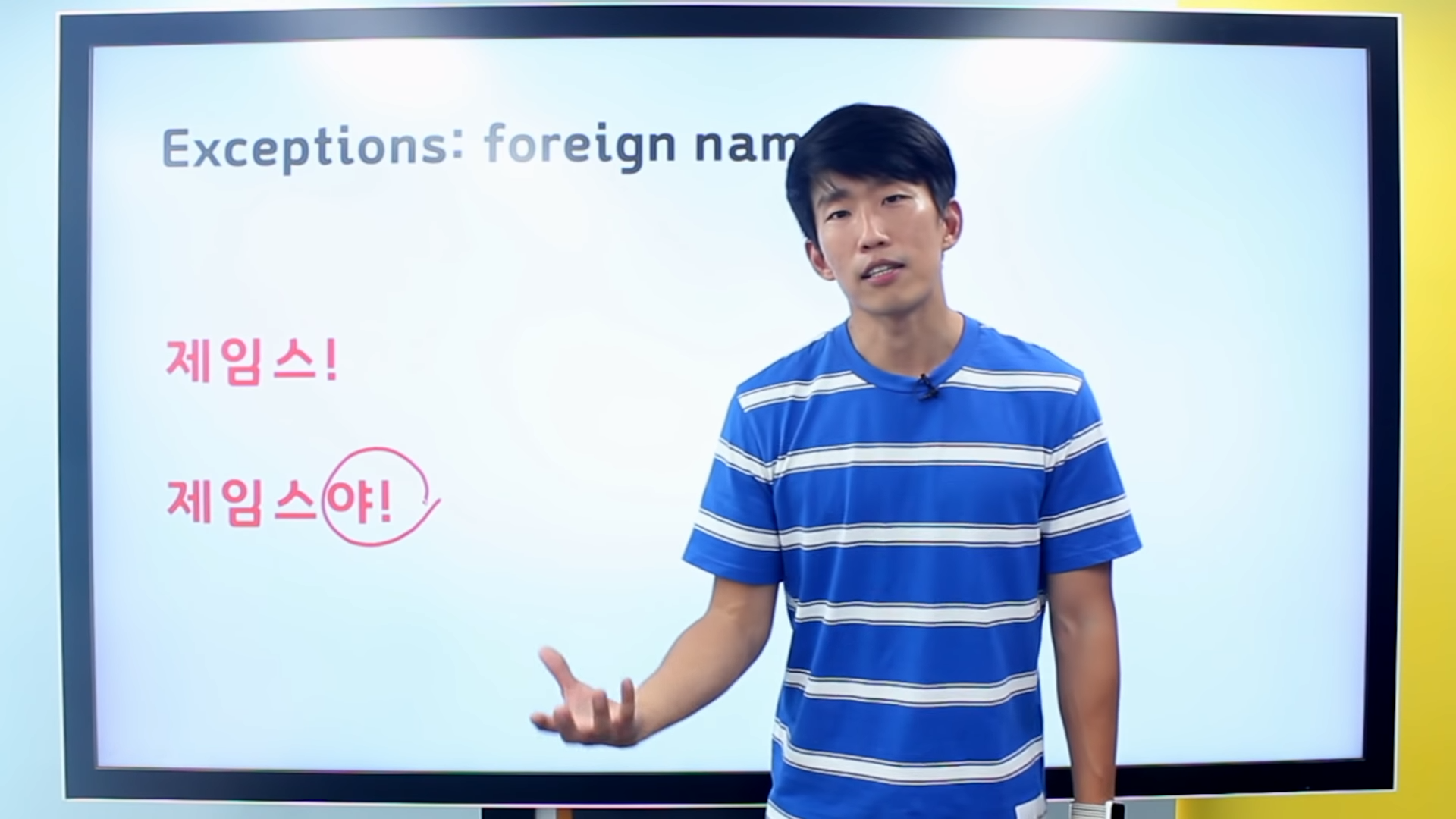
When calling someone with a foreign name, you have a bit more flexibility.
For example, if your friend is named James:
- You could say just “James!”
- Or you could say “제임스야!” if you usually speak casually with them.
If you attach an ending, you still follow the vowel/consonant rule in pronunciation.
✅ Other Useful Endings (More Formal or Polite Situations)
▸ -씨
In other settings, such as talking with a colleague, other endings would be more applicable. If 현우 was in a conversation at work with a colleague of a similar position and age, then that colleague may address him as 현우씨. The use of this ending is still slightly casual but appropriate among colleagues of the same rank.
▸ -님
Another ending popular among colleagues is the ending -님. This ending is slightly more respectful than previously mentioned. While both -씨 and -님 can be applied when talking with peers at work, -님 shows regard if the listener happens to be older than you. In Korea and many other East Asian countries, certain endings are used to show more respect when talking with someone older than you.
▸ -언니
This ending is not commonly used today in most situations, but when it is, it’s typically used by women when addressing someone older than them.
To summarize:
- -아, -야, -이 are NOT gender-based endings.
- They are used only with casual speech (반말).
- They are chosen based on whether the name ends in a vowel or a consonant.
As you continue learning Korean, you will naturally become familiar with the wide variety of endings used depending on age, relationship, and setting.
Let us know what you think of this explanation!
And if you’re curious about more honorifics and real-life Korean usage, visit our website for structured lessons and resources 😊
Why Talk To Me In Korean?
Talk To Me In Korean is known worldwide for breaking down the language barrier and making Korean easy to learn. Our lessons are designed by experienced teachers who’ve guided countless learners down this same path. We blend solid teaching with a lighthearted approach, so you’ll find yourself having fun while actually making progress.