How do you pronounce Korean double consonants?
If you’ve ever thought “How do I pronounce Korean double consonants?”, you’re not alone!
Many beginners find sounds like 가 (ga), 카 (ka), and 까 (kka/gga) almost identical.
But once you understand how to pronounce Korean double consonants, you’ll unlock clearer pronunciation and stronger listening comprehension.
The secret lies in air control, pitch, and tension.
Let’s break down each consonant step-by-step so you can confidently recognize the difference.
🗣️ Step 1. How to pronounce 가, 카, and 까
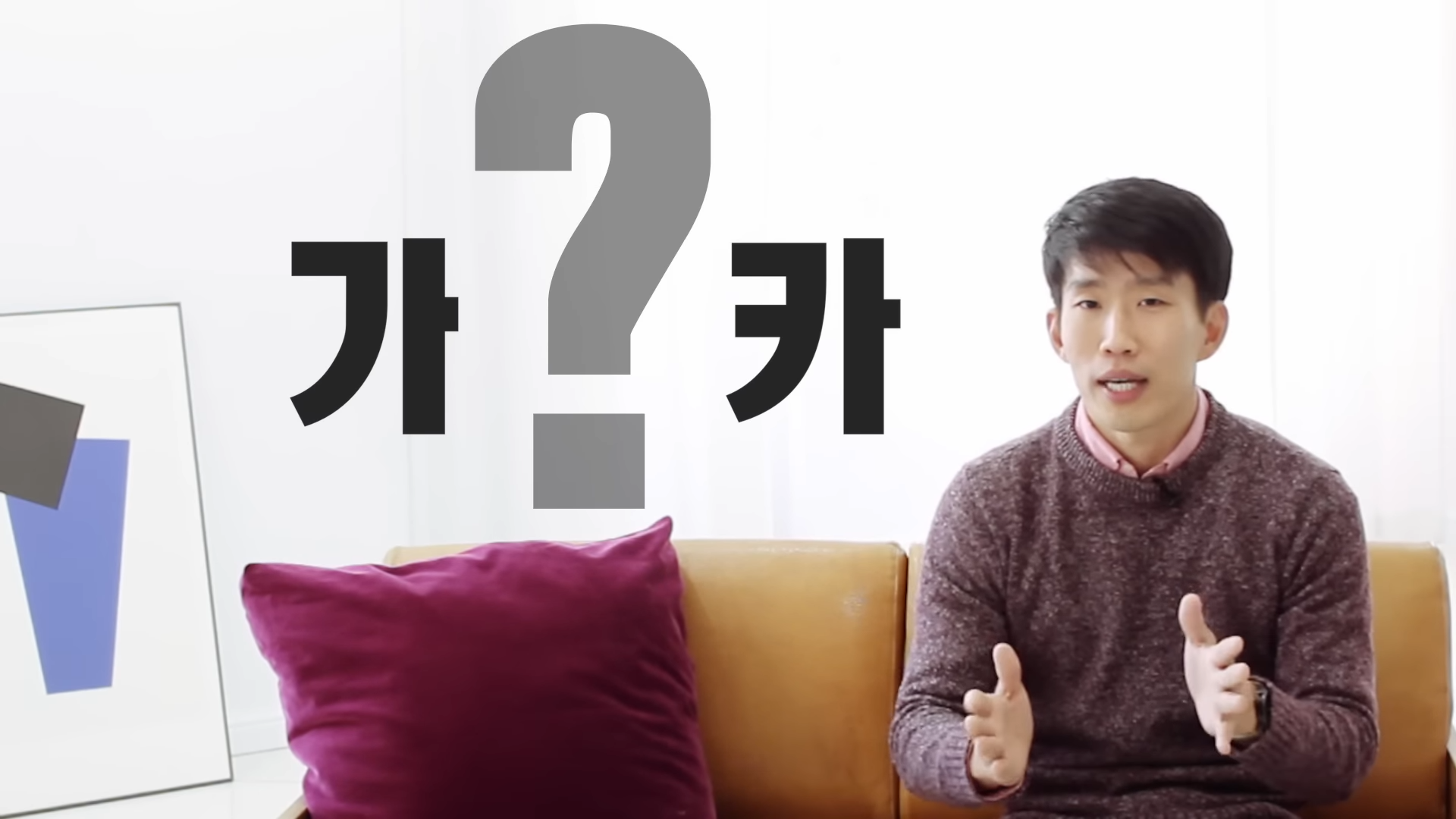
To an untrained ear, these three consonants sound identical, but with this guide, you should be able to recognize each.
| Sound | Romanization | Air | Pitch | Example |
|---|---|---|---|---|
| 가 | [ga] | light | mid | 가방 (bag) |
| 카 | [ka] | stronger | high | 카드 (card) |
| 까 | [kka/gga] | explosive | highest | 까치 (magpie) |
- How to say 가 [ga]
The sound sits between [ga] and [ka]. Add a soft breath of air — it’s gentle, not harsh. - How to say 카 [ka]
Say it with stronger air and a slightly higher pitch. - How to say 까 [kka/gga]
Add energy and loudness. 까 is always abrupt and powerful. You can’t whisper it!
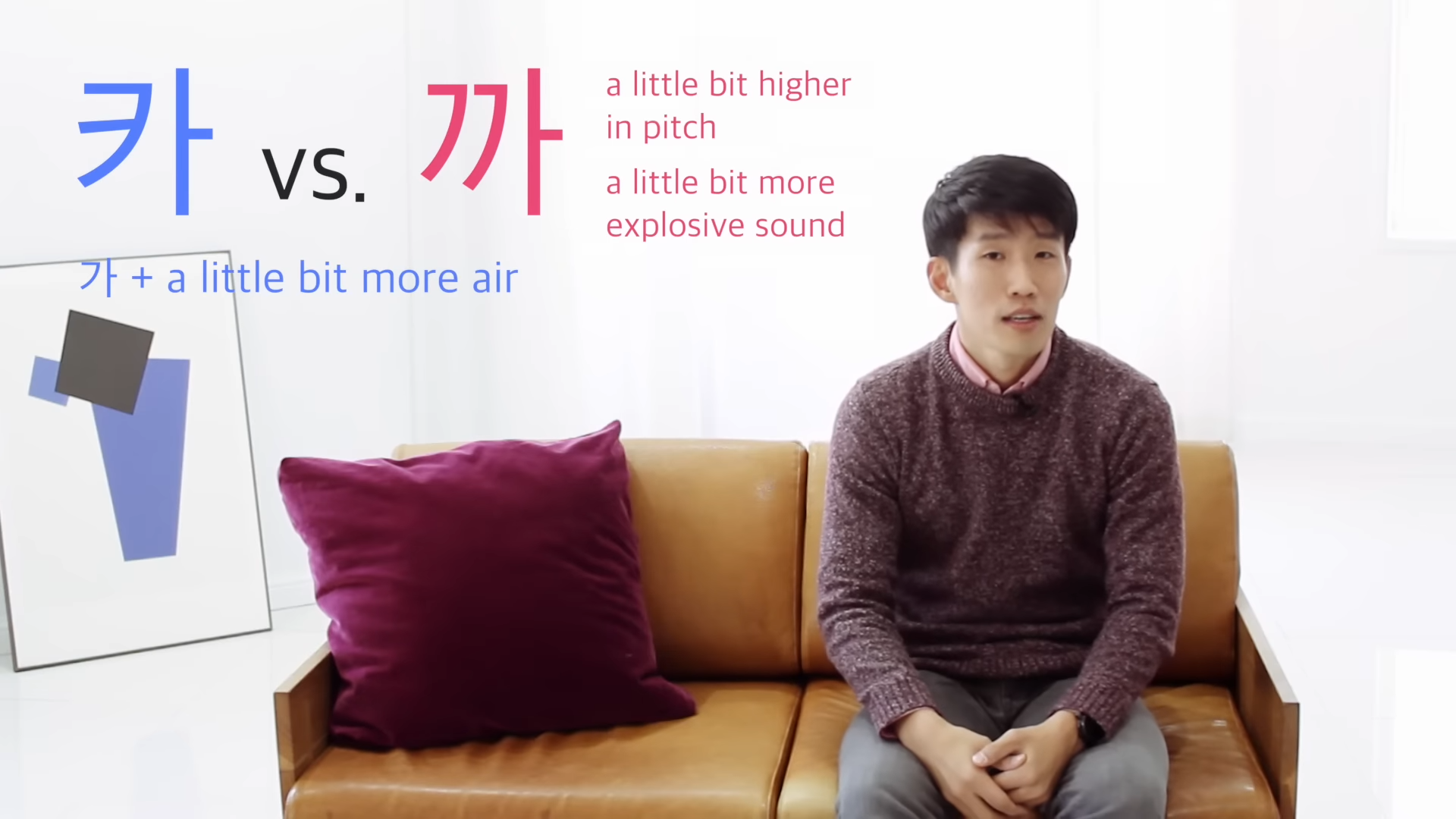
🎧 Practice Tip: Follow along with our listening practice included in the video, skip ahead to (3:47) to test your skills. We recommend pausing the video first and practicing aloud yourself before listening to the speaker.
🗣️ Step 2. How to pronounce 나, 다, 타, and 따
| Sound | Air | Pitch | Example |
|---|---|---|---|
| 나 | light | low | 나라 (country) |
| 다 | short | mid | 다리 (bridge) |
| 타 | airy | high | 타다 (to ride) |
| 따 | explosive | highest | 따뜻하다 (warm) |
- 나 [na] → light and melodic
- 다 [da] → more abrupt and firm
- 타 [ta] → softer, but longer with more air
- 따 [tta] → strongest, with a “pop” sound
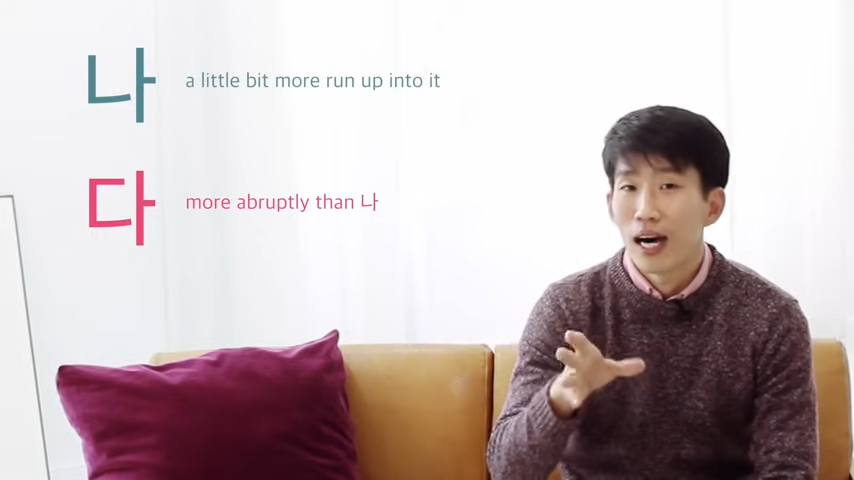
🎧 Practice Tip: Second round of our listening practice included in the video, skip ahead to (6:36) to test your skills. Try recording yourself and comparing 다–따.
🗣️ Step 3. How to pronounce 사, 자, 차, and 싸
The rule stays the same:
More air + higher pitch = stronger sound.
| Sound | Air | Pitch | Example |
|---|---|---|---|
| 사 | smooth | low | 사랑 (love) |
| 자 | stronger | mid | 자다 (to sleep) |
| 차 | airy | high | 차 (car/tea) |
| 싸 | very strong | highest | 싸다 (cheap) |
You’ll notice 싸 [ssa] and 짜 [jja] are impossible to say quietly, as they should be pronounced with the most explosiveness and highest pitch.
Following these rules, take a look at the image below to see where each of the double consonants in this set ranks in terms of both factors, those at the bottom being the least abrupt and lower pitch.

🗣️ Step 4. How to pronounce 마, 바, 파, and 빠
Our final group follows the same pattern: Pitch and air increase up the ladder:
마 → 바 → 파 → 빠.

| Sound | Air | Pitch | Example |
|---|---|---|---|
| 마 | soft | low | 말 (word) |
| 바 | firmer | mid | 바다 (sea) |
| 파 | airy | high | 파도 (wave) |
| 빠 | explosive | highest | 빠르다 (fast) |
🎧 Practice Tip: Go ahead to (9:33) to test your skills. Once again, try pausing the video first and practicing aloud yourself before listening to the speaker. How did you do?
💡 Quick Tips for Mastering Korean Double Consonants
1) Focus on air control — short bursts for strong sounds, steady flow for soft ones.
2) Adjust pitch — stronger sounds tend to be slightly higher.
3) Listen and repeat after native audio or video.
4) Record yourself to identify subtle pronunciation differences.
🏁 Ready to Practice?
Mastering the pronunciation of Korean double consonants takes patience, practice, and awareness of air and pitch.
Once you train your ear and mouth to recognize the difference between Korean double consonants, you’ll sound clearer and more natural in every conversation.
Explore more pronunciation resources and Hangeul practice materials at Talk To Me In Korean.
We're always thinking outside the box and taking chances to make your Korean journey the most enjoyable and effective it can be. With 15 years of experience, we’ve been providing the best guidance for learning Korean to more than 1.7M users from all over the world. If you're not sure where to start or how to learn Korean, you’ve come to the right place!

![[Intern’s Log📝] It’s a Piece of (Rice) Cake! 🍡 –Rice cake (떡) Themed Idioms](https://storage.ghost.io/c/7d/bb/7dbb35a0-481d-4d75-96b3-9a77564f9669/content/images/size/w720/2026/10/Gemini_Generated_Image_4th3ih4th3ih4th3.png)
![[Intern’s Log📝] Elevate Your Korean Proficiency with Hanja](https://storage.ghost.io/c/7d/bb/7dbb35a0-481d-4d75-96b3-9a77564f9669/content/images/size/w720/2026/10/hanjaimage.png)