In this post, we'll introduce five high-impact mistakes that Korean learners make all the time, often without realizing it. Fixing just these five will immediately make your Korean sound more polite, natural, and native-like!
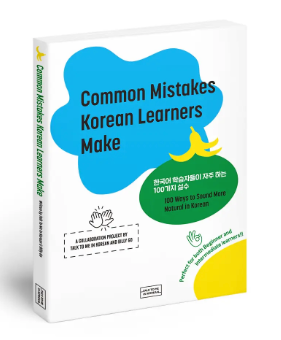
🍌 The content introduced in this post is part of TTMIK’s book Common Mistakes Korean Learners Make.
⏰ A little heads-up!
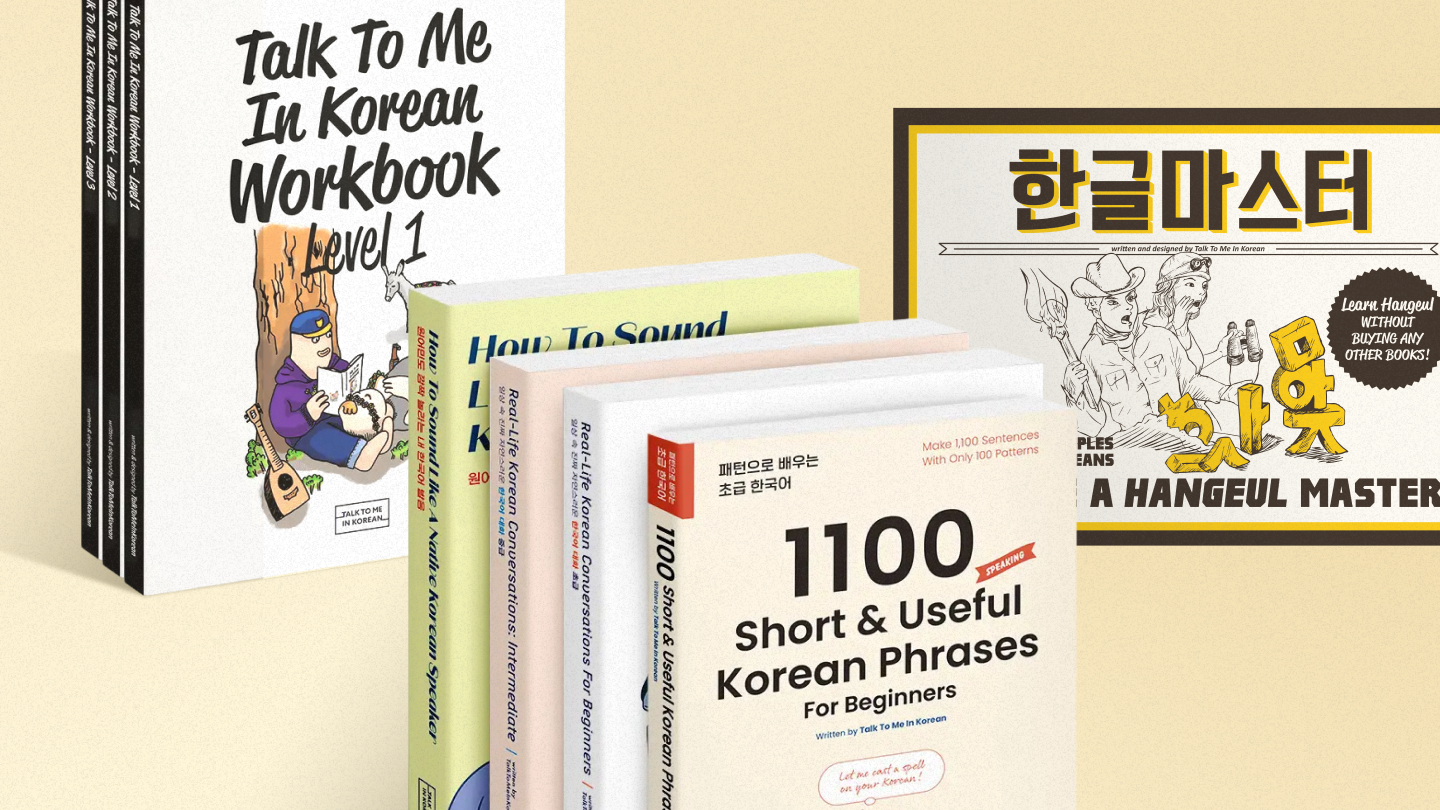
The TTMIK Bookstore is currently running a discount!
Feel free to browse around and treat yourself to any book you have been curious about, now at a friendlier price 😃
The sale runs until December 2, 2025, so take a peek before it ends!
1) Using 반말 when you should use 존댓말
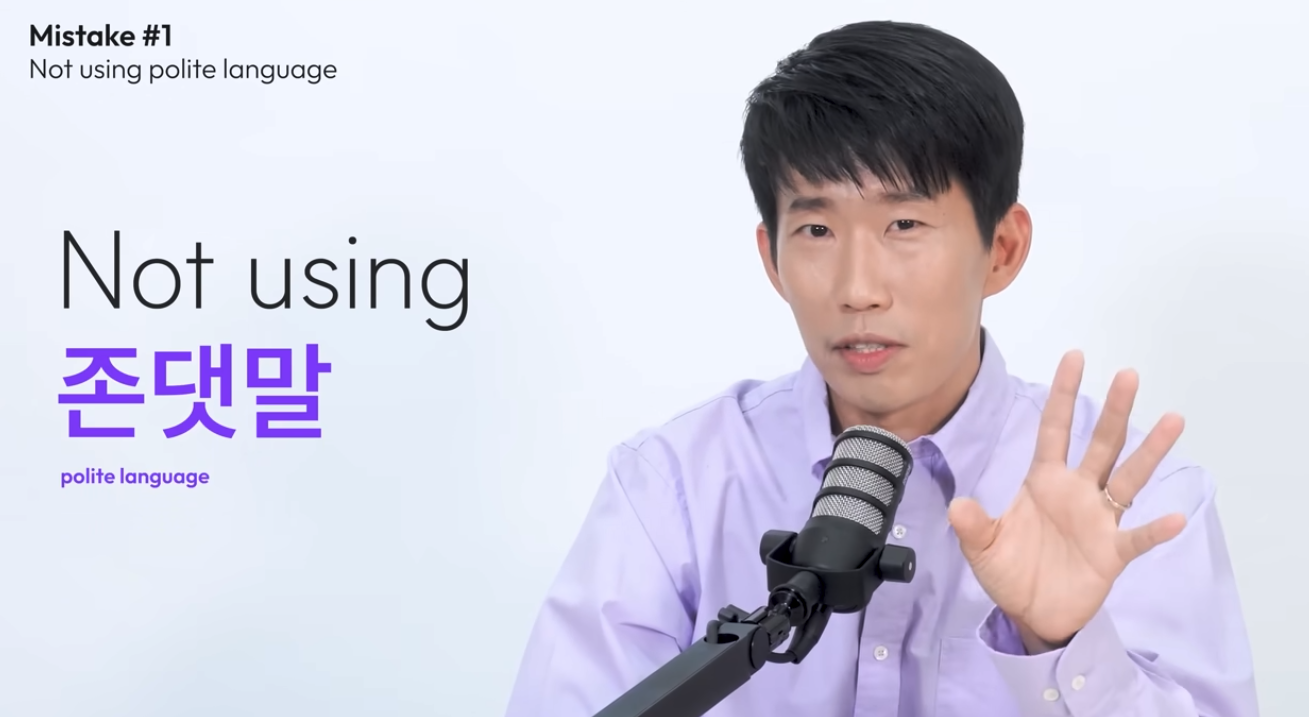
Korean has very clear boundaries between casual speech (반말) and polite speech (존댓말). Using 반말 before you’ve built a close relationship can sound unexpectedly rude and hurt somebody's feelings, even if that wasn’t your intention.
✔ Natural polite endings
- 안녕하세요
- 감사합니다
- 맞아요
- 괜찮아요
- ~요 / ~지요
Why this matters
Korean relies heavily on politeness levels, and 존댓말 is the safest choice unless both sides clearly agree to switch to 반말.
2) Saying personal pronouns
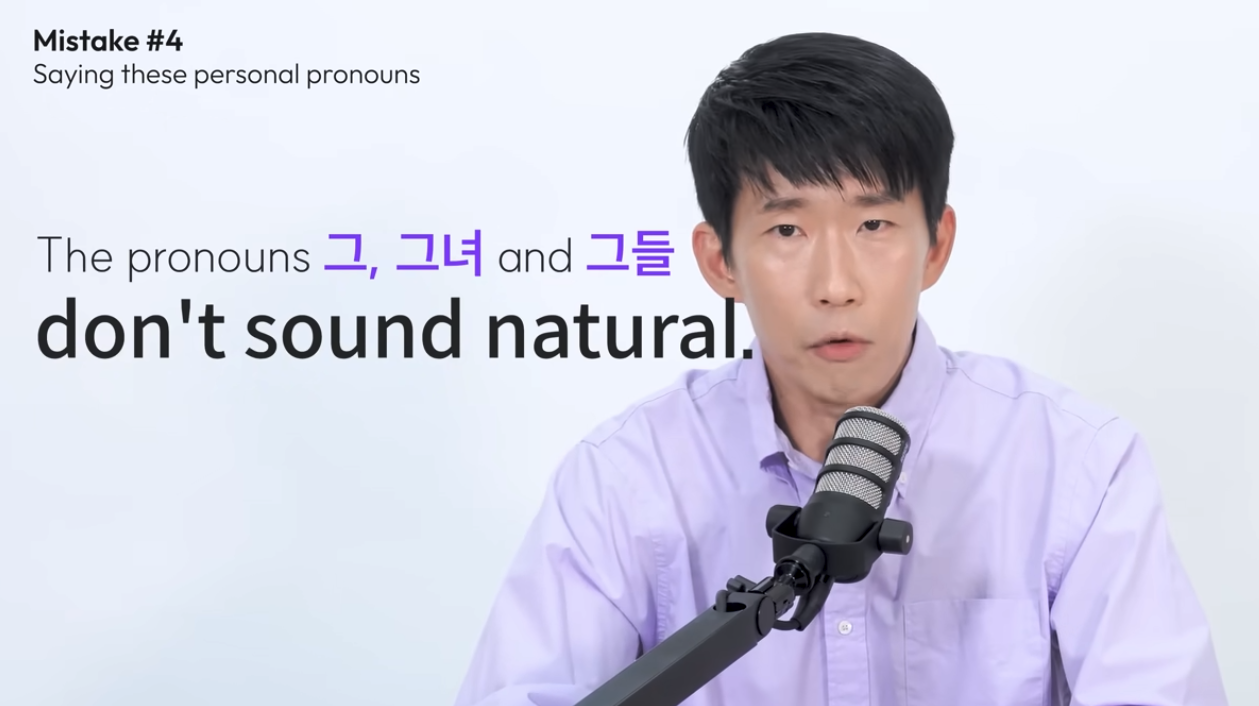
In everyday Korean, 그, 그녀, 그들 are rarely used in conversation. They tend to sound poetic, old-fashioned, or overly formal. Instead, Koreans normally use names, titles, or simply omit the pronoun when the context is clear.
✔ More natural alternatives
- Using names: 한나는 한국 사람이에요.
- Using roles/titles: 선생님은 한국 사람이에요.
- 그 친구 (“that friend”): 그 친구는 한국 사람이에요.
3) Always using -만 for “only”
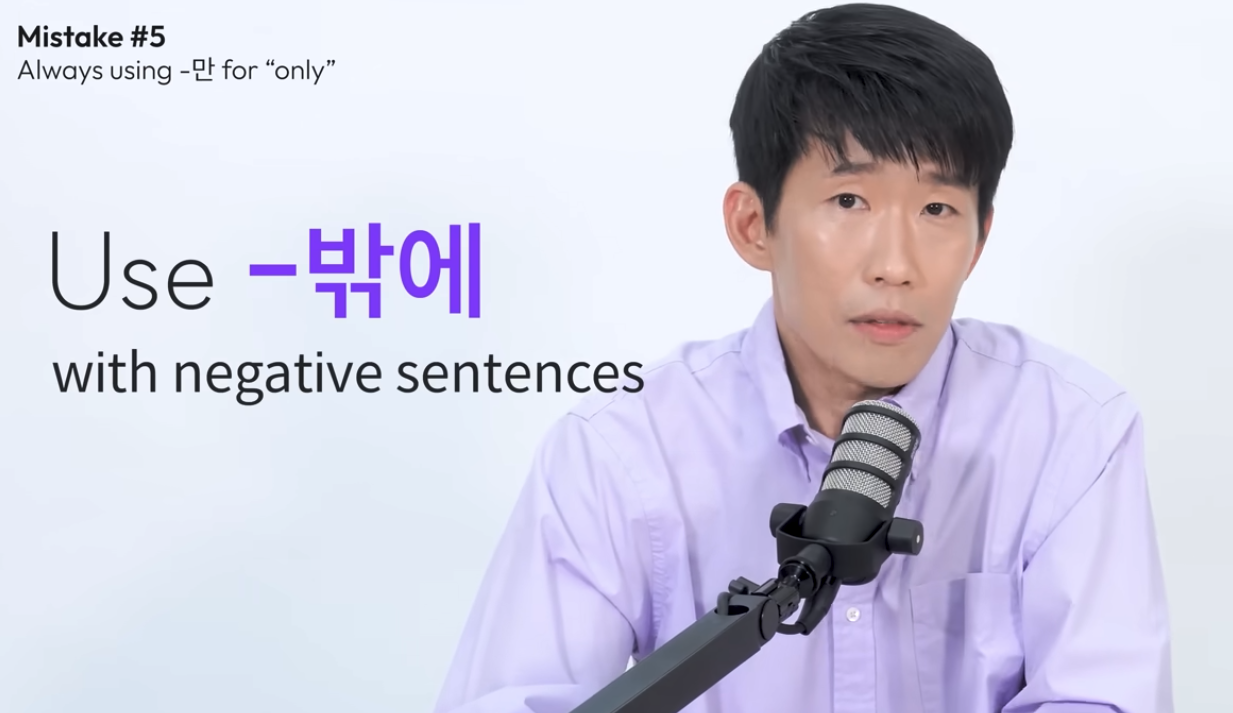
만 is only used mainly for specific contexts like conditional phrases. Instead of using -만, use -밖에 with negative sentences.
❌ Incorrect
- 한국어 조금만 할 수 있어요.
- 한 명만 있어요.
⭕ Natural
- 한국어 조금밖에 못해요.
- 한 명밖에 없어요.
✔ When -만 is correct
- Requests / commands: 한 장만 주세요.
- Conditional meaning: 이것만 하면 돼요.
- Limited use in more complex sentences
4) Saying “제 엄마 / 내 엄마”
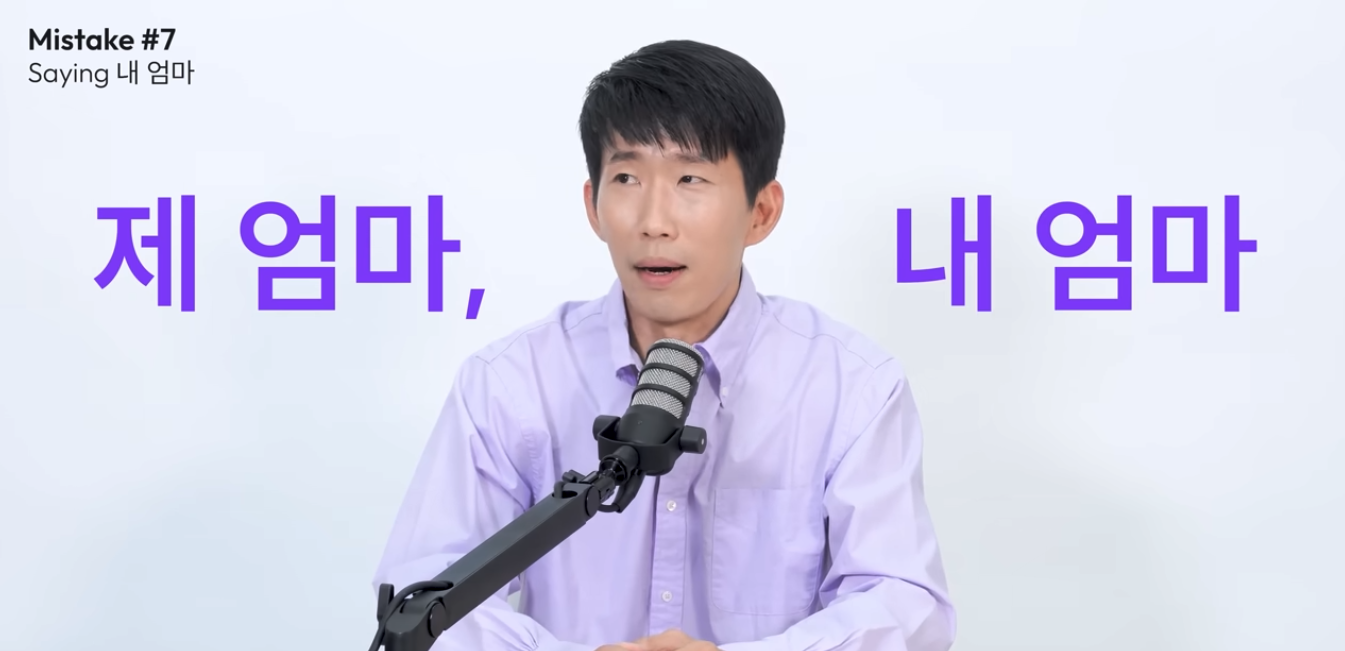
Although 제 엄마 / 내 엄마 are grammatically possible, they are extremely uncommon in real Korean conversations.
Korean uses family terms as shared relational nouns, even when the listener is not in your family, so speakers naturally choose 우리 / 저희 instead of “my.”
❌ Unnatural
- 제 엄마
- 내 엄마
✔ Natural
- 저희 엄마 (polite / 존댓말)
- 우리 엄마 (casual / 반말)
5) Listing all actions with -고
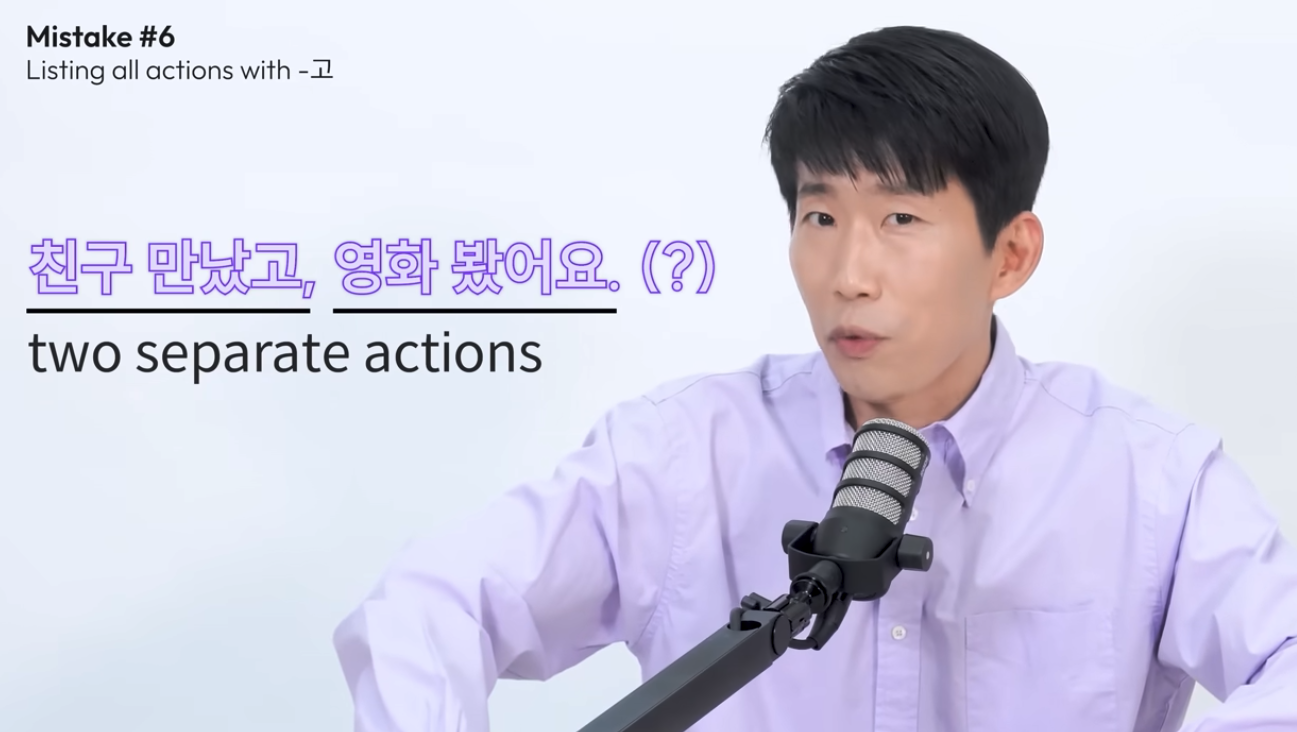
-고 simply lists actions.
-서 expresses connected actions, where one action leads to the next.
❌ Unnatural
- 친구 만났고 영화 봤어요.
(This sounds like you met your friend and then watched a movie alone.)
✔ Natural
- 친구 만나서 영화 봤어요.
(= I met my friend and then we watched a movie together.) - 친구 만나서 영화 보고 밥도 먹었어요.
Want to Dive Even Deeper?
What we covered here is just the tip of the iceberg!🧊
If you want to dive deeper into more common mistakes that Korean learners often make, check out our book <Common Mistakes Korean Learners Make> in the TTMIK Bookstore. It is packed with practical insights you will love💚
Let Us Boost Your Korean Confidence! 🚀
Talk To Me In Korean is known worldwide for breaking down the language barrier and making Korean easy to learn. Explore more graded and engaging Korean books, along with accompanying audio files, at TTMIK Books, trusted by millions of learners around the world.