According to the Korean horoscope, 2026 is the Year of the Red Horse.
And I can't think of a better time to learn Korean expressions with 말! 🐎
In this post, we’re going to explore a fun mix of proverbs, idioms, and even memes that include 말 from classic “life advice” sayings to playful modern slang you’ll hear online.
Let's go! 🥕
🥕 Quick mini-glossary
- 말 = horse / words
- 고삐 = reins
- 바꾸다 = to change
- 타다 = to ride
- 발 = foot
- 천리 = a thousand-li
('리(li)' is a unit of distance, equal to about 0.5 km)
🏞️ Jeju for horses, Seoul for people
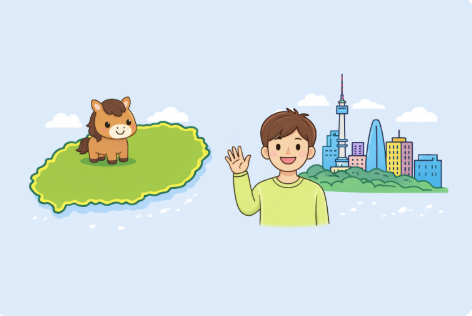
First up is a classic proverb: “말은 나면 제주로 보내고 사람은 나면 서울로 보내라.”
It basically means: horses should grow up in the best environment (Jeju!), and people should grow up where they can learn the most (Seoul!).
If you’ve ever been to Jeju, you’ll get the image right away: open space, fresh air, and gorgeous nature 🌴. It just feels like the kind of place where a horse would thrive.
Seoul, on the other hand, is the total opposite vibe (in a good way): convenient transportation, tons of infrastructure, and lots of learning opportunities 🚌. So, it naturally became a symbol of “the best place to study and grow.”
In the end, it’s an old-school but warm reminder: the right environment can make a huge difference, whether you’re raising a horse… or learning Korean 😆
🐴 Don’t Lose Control, Don’t Switch Midway
Before we talk about 고삐 풀린 말,
let’s learn a useful word first: 고삐.
고삐 means “reins”, the straps you hold to guide a horse. Once you know that, this expression suddenly makes sense: 고삐를 틀어쥐다.
고삐를 틀어쥐다 literally means “hold the reins tight,” and it’s used to mean To supervise something and proceed with it actively and vigorously.
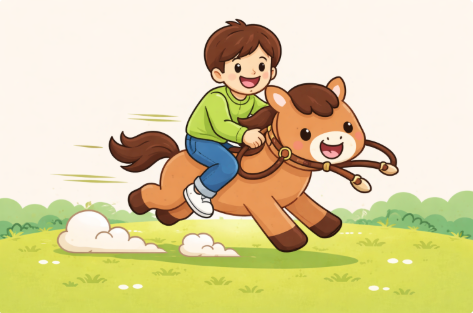
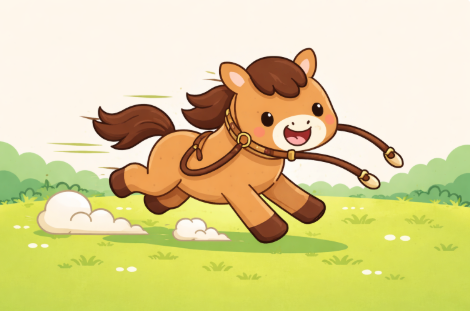
And when you do the opposite, when the reins are loosened, you get a great expression: 고삐 풀린 말, a horse with its reins loosened.
The image is super clear: someone is unrestrained, out of control, or just doing whatever they want. It’s perfect for those moments when your schedule collapses and you suddenly feel… wildly free!
Next is 말을 바꾸어 타다.
It literally means “to change the horse you’re riding.”
In real life, it’s used to talk about switching to a different person, plan, or direction midway through. You’ll often hear it with a “don’t do that” vibe—like when someone wants to quit or change the plan halfway through.
🛝 Wordplay with 말
1) A horse without feet...?
In Korean, 말 is a super interesting word because it has two meanings:
- 말 can mean “horse” 🐎,
- But it can also mean “words/speech” 🗣️ (as in “what you said”).
That’s why the proverb 발 없는 말이 천리 간다 is even more fun. At first, you might think: “Wait, how can a horse without feet travel far?” It doesn’t seem to make any sense.
But here, 말 means “words,” not “horse.” So the proverb means that words can travel far, even without feet, because gossip and rumors spread faster than you expect. The hidden message is simple: be careful what you say, because it can go much farther than you think.
2) Latte is horse...? ☕ =🐴 ?
And finally, we have the modern meme expression 라떼는 말이야~. It’s a playful twist on 나 때는 말이야 (“Back in my day…”), and it’s often used to tease someone who’s about to start a long, dramatic story about “the good old days.”
Plus, Korean learners love it because it sounds like “Latte is horse,” which makes it even funnier.
👉 Just be careful! If you use it at the wrong moment, you might sound a little old-fashioned or like you’re lecturing.

Learn exactly what you need
at your own pace with TTMIK!
Choose lessons by level or topic, and shape a learning path that fits you.
From real-life conversations to natural pronunciation, boost your Korean skills and feel your Korean confidence rise with TTMIK's carefully curated curriculum.