When learning a new language, as we start to develop our skills, we might notice certain words that are difficult to differentiate between. Whether that be the way they are pronounced or written, even native speakers can sometimes struggle with these types of words. A similarity we can compare to in English is using the words “there,” “their,” or “they’re,” which are all pronounced the same but provide different meanings and written forms.
Here are some frequently asked questions from people in the process of learning Korean:
1. 맞히다 vs 맞추다
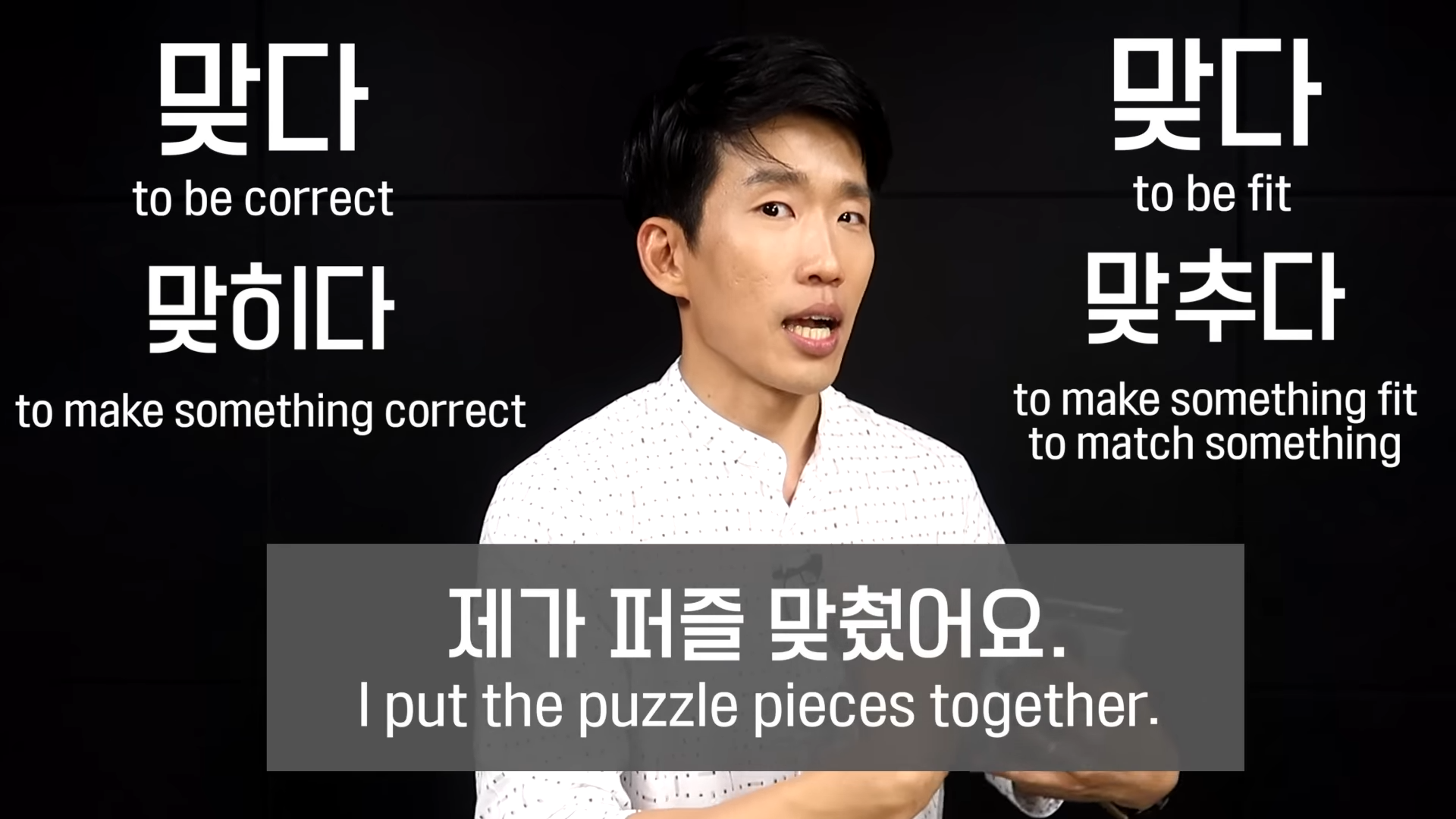
a. When using 맞히다, the meaning of this word is “to be fit”. When used in context, it can be applied to circumstances like trying on new clothes that fit well on you, or clothes that suit you well. This word is versatile and can also be used in other situations. For example, if you’re completing a puzzle and one of the pieces fits perfectly in place, then in this context, you would use 맞히다.
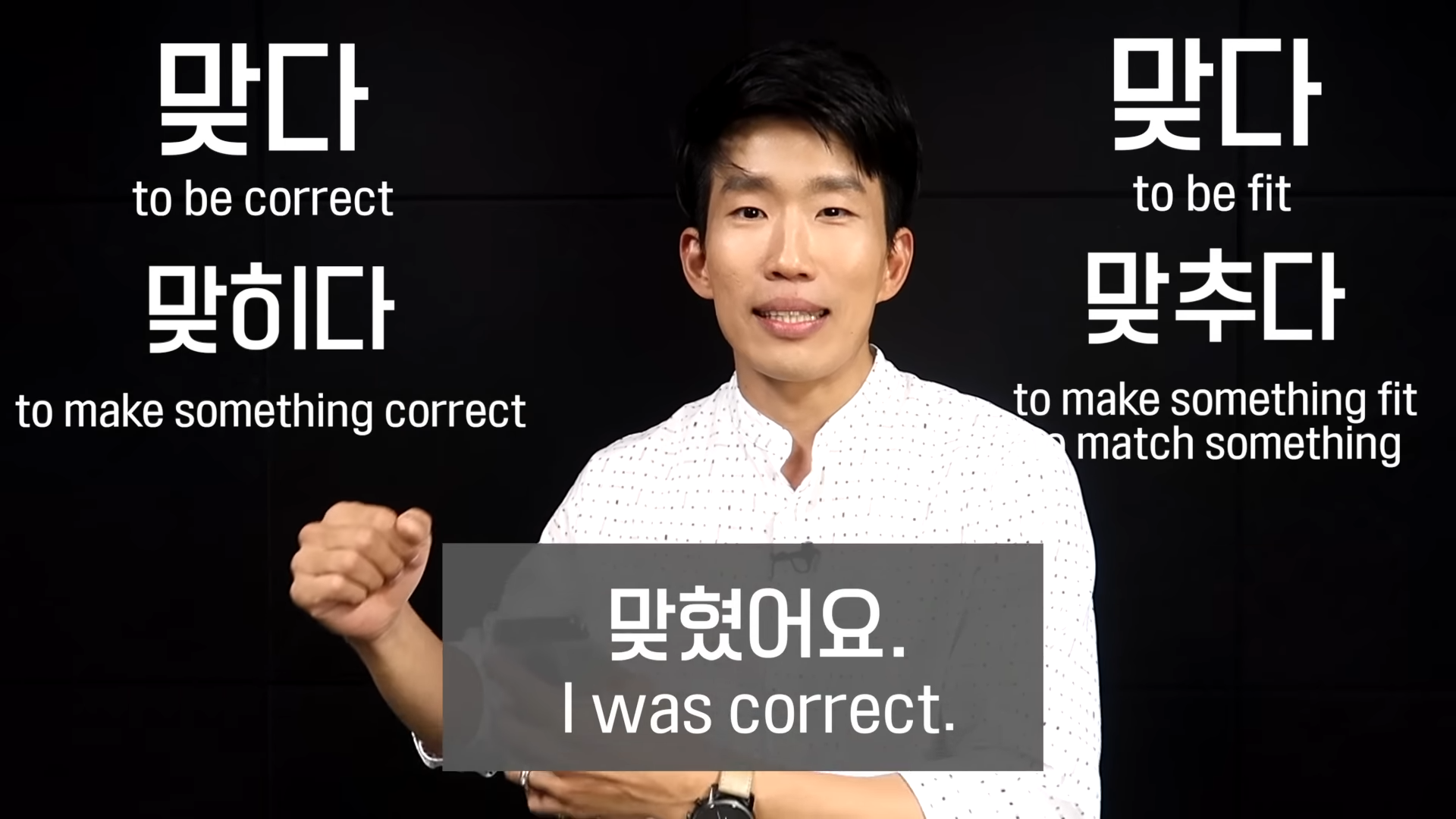
b. On the other hand, 맞추다 is used in a different context. Again, while both refer to 맞다 and sound similar, they do not mean the same and should be used for their respective contexts. For 맞추다, this word means “to be correct” and should be used as such. For example, if you answered a question correctly or accomplished something in the right manner, then 맞추다 would be used.
2. Why does 우리 mean “my”?
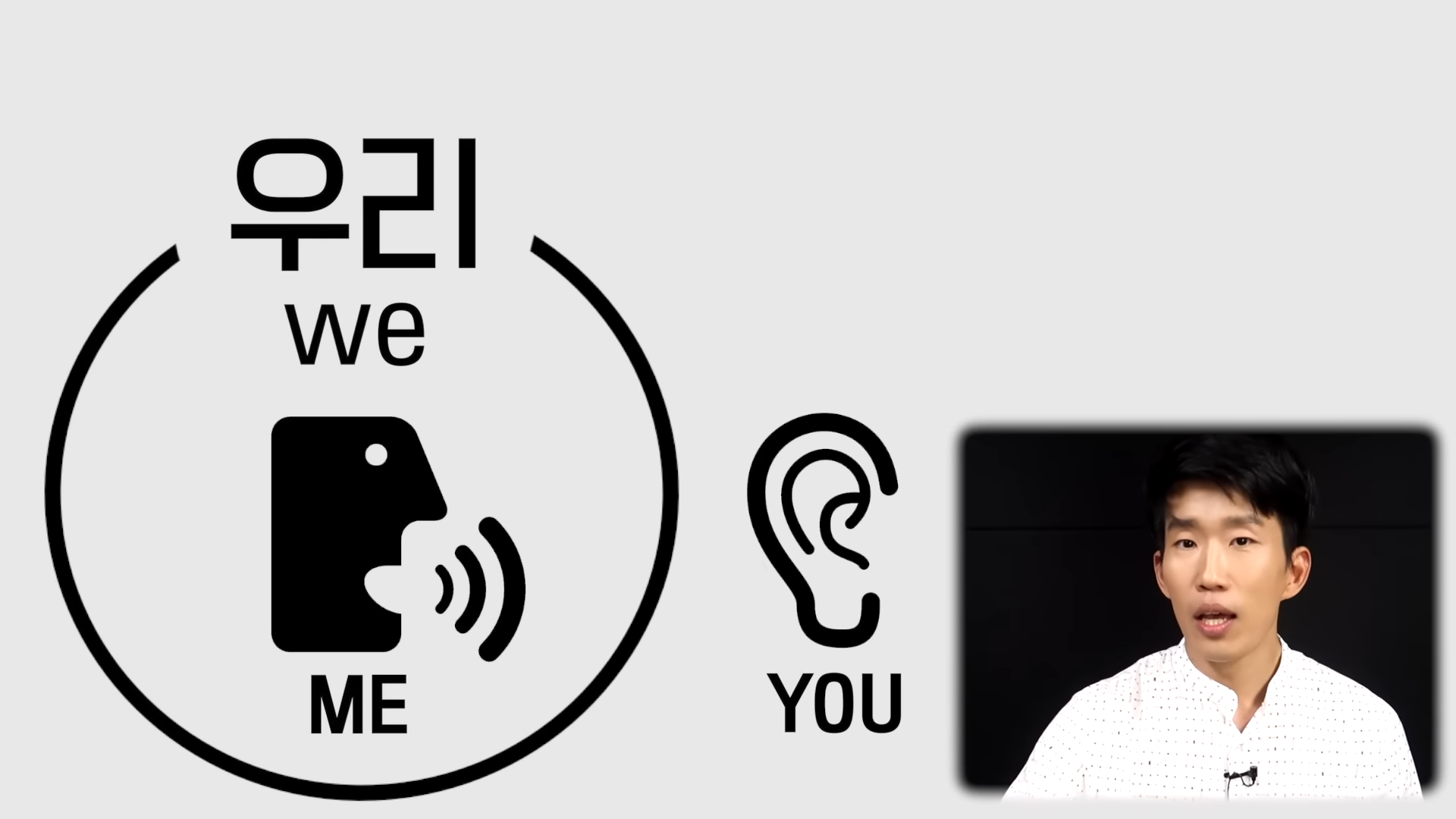
Another frequently asked question is why the word 우리 translates to “my” when the word directly means us/we/our. The reason for this is a cultural difference between other languages and Korean.
Cultural Usage
This word, which appears to indicate possession by multiple people, actually refers to what is related to an individual.
For example, while it may seem strange, if you were trying to refer to your partner as “my wife” or “my husband,” you would say 우리 와이프 or 우리 남편, which directly means “our wife/husband.”
Why It Makes Sense in Korean
In English, this meaning doesn’t make much sense, but in Korean, it refers to possession within the speaker’s circle compared to the listener.
By saying “our wife/husband,” the speaker is indicating that the spouse belongs to their whole family. So if the speaker is referring to their partner and they have children, then they are saying this person is the wife/husband that belongs to our family. This applies in the context of claiming ownership (“my”) of something that excludes the listener.
Other ways to say “we/our”
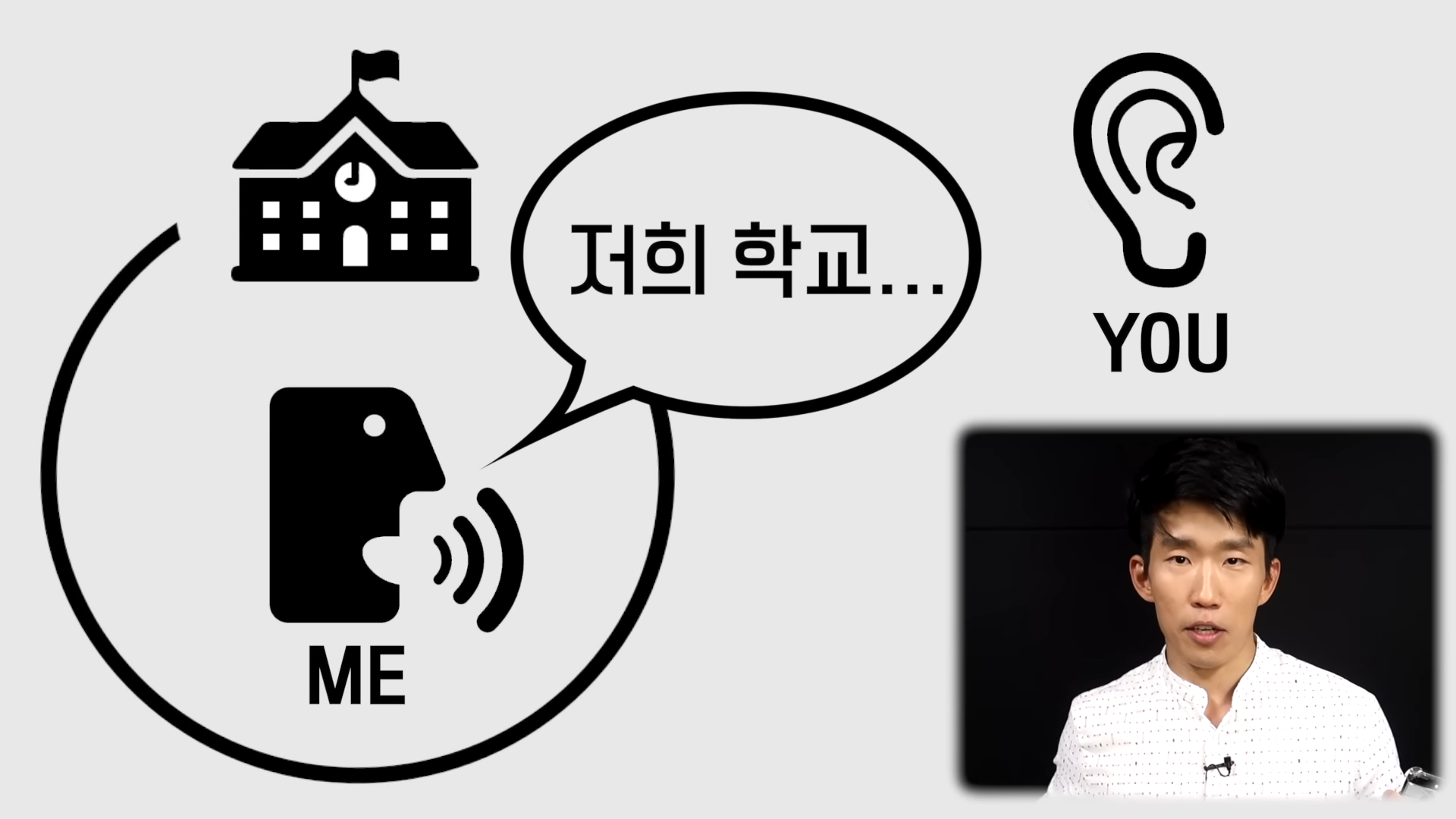
There are also other ways to say "we" that directly translate, such as 저희. This usage still excludes the listener but would be used in a context where you do not claim full possession over what you are discussing but are a part of it. For example, if you’re talking to someone describing “our school has x,” then 저희 would be used instead of 우리.
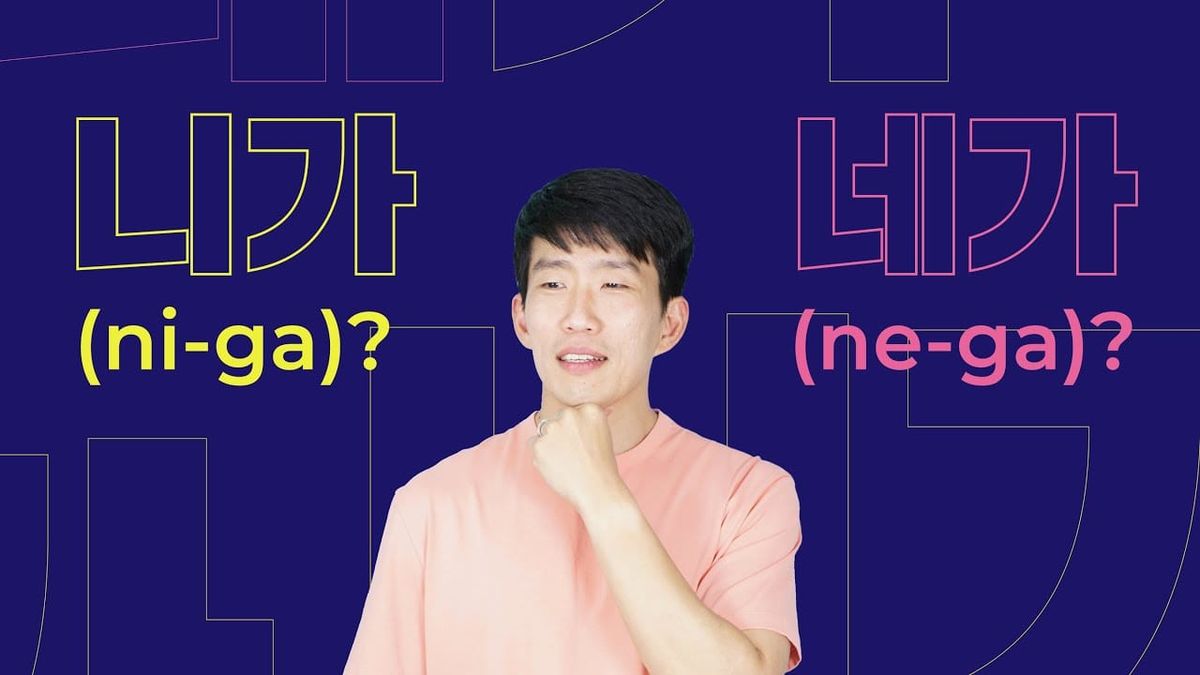
3. “니가" (ni-ga) and "네가" (ne-ga)
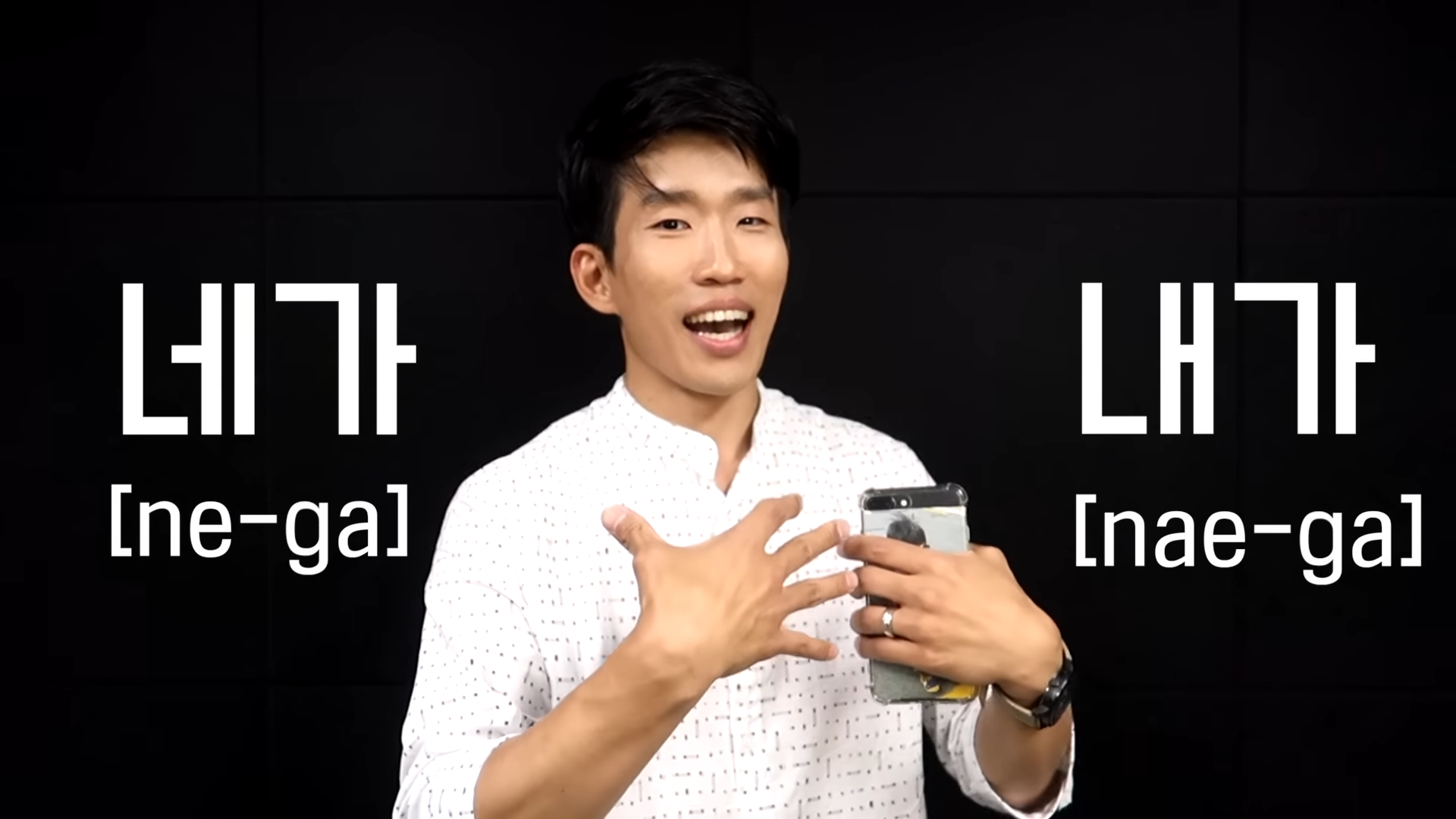
The next question asks about the difference between “니가" (ni-ga) and "네가" (ne-ga) when both are being used. The reason for this is that the colloquial use of the word "네가" (ne-ga) meaning “you” has shifted the pronunciation slightly.
While the written form used in textbooks and correctly spelled is still "네가" (ne-ga), when spoken out loud, in most regions, it is no longer pronounced this way. Instead, we can hear it sounding like “니가" (ni-ga) in Korean when used to mean “you.”
Why the Shift Happened
The reason for this shift is that while "네가" (ne-ga) means “you,” the word "내가" (nae-ga) means “I.” When spoken out loud, the sounds are very similar, which could cause confusion. Therefore, a new pronunciation for “you” → “니가" (ni-ga) was adopted to help differentiate whom the speaker is referring to.
Current Usage
While this is how the word now sounds in conversation, it is still considered strange to write “니가" (ni-ga). That’s why the original spelling "네가" (ne-ga) continues to be used in writing in Hangul.
4. Does “verb + -자” mean “Let’s do this”?
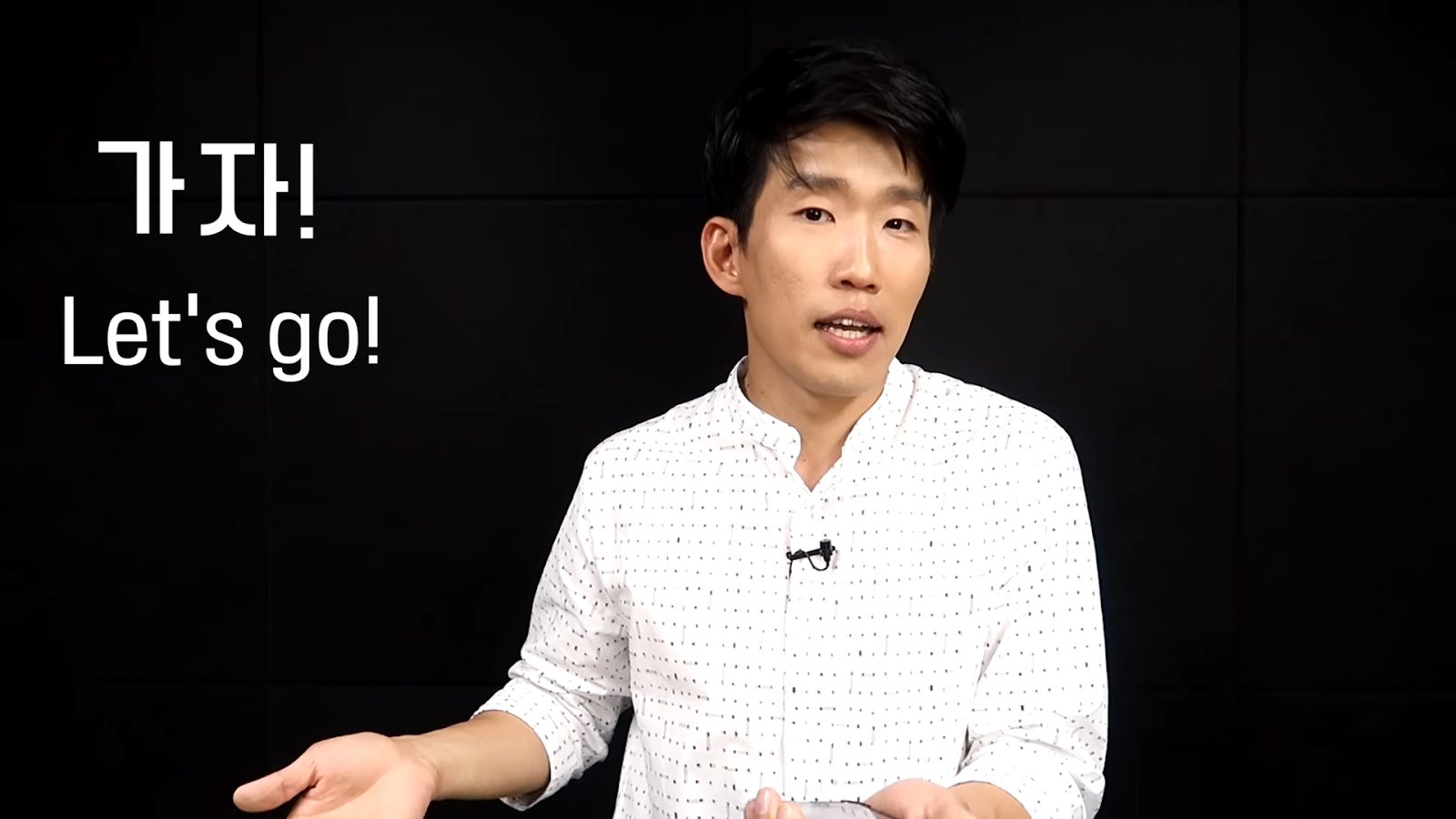
While adding -자 to a verb does indicate extending an invitation, there is a little more work involved than simply putting it at the end.
How to Conjugate
Rather than stating the full verb and then including -자, you must conjugate the verb. To conjugate the verb, you take the verb stem and then add -자 to the end of it.
Not only must you conjugate the verb first, but this can also only be applied in casual language or "반말" (banmal).
The reason for this is that although adding this extends an invitation from the speaker to the listener, its meaning of “let’s” is considered informal. Since this form lacks politeness, it can be perceived as abrupt or too direct, therefore it is only used in a casual manner.
All Good?
Hopefully, these answers have provided you with more information for some of your questions. If you are looking for more information, please check out our YouTube channel or the course materials we provide on our website.
Why Talk To Me In Korean?
Talk To Me In Korean is known worldwide for breaking down the language barrier and making Korean easy to learn. Our lessons are designed by experienced teachers who’ve guided countless learners down this same path. We blend solid teaching with a lighthearted approach, so you’ll find yourself having fun while actually making progress.

![[Intern’s Log📝] It’s a Piece of (Rice) Cake! 🍡 –Rice cake (떡) Themed Idioms](https://storage.ghost.io/c/7d/bb/7dbb35a0-481d-4d75-96b3-9a77564f9669/content/images/size/w720/2026/10/Gemini_Generated_Image_4th3ih4th3ih4th3.png)
![[Intern’s Log📝] Elevate Your Korean Proficiency with Hanja](https://storage.ghost.io/c/7d/bb/7dbb35a0-481d-4d75-96b3-9a77564f9669/content/images/size/w720/2026/10/hanjaimage.png)