In this post, we’ll go over three pronunciation mistakes that many learners make and show you how to fix them quickly.
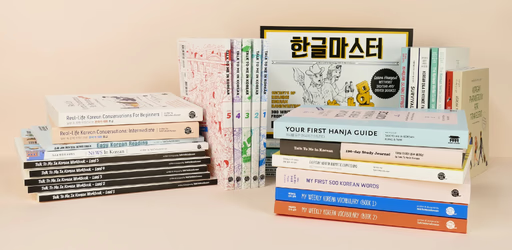
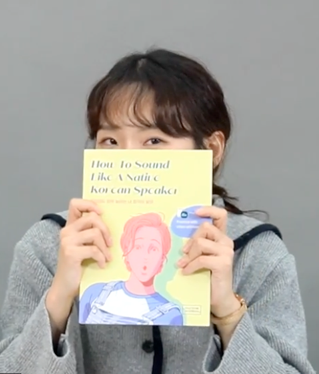
If you want to sound more like a native speaker, check out one of our bestselling books: 📘 “How to Sound Like a Native Korean Speaker.”
1️⃣ The “k” Sound at the End of Words
Let’s start with this word: 기억 (memory)
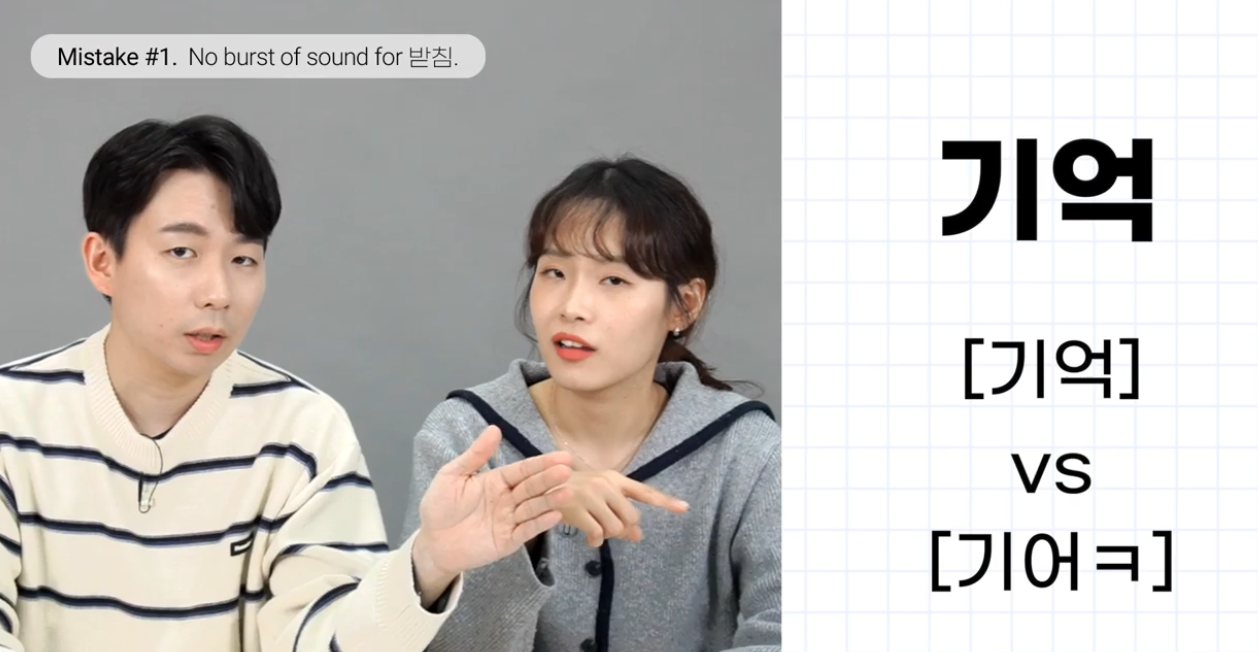
If you pronounced it like [기어k], you're on the right blog! Many learners add an English-style [k] sound at the end.
But in Korean, final consonants (받침) like ㄱ are pronounced softer and shorter, almost like the sound stops before the air is released.
✅ Correct pronunciation: [기억]
❌ Incorrect pronunciation: [기어k]
The same rule applies to borrowed words like:
- 플라스틱 (plastic) → say [플라스틱], not [플라스틱k]
- 부엌 (kitchen) → say [부억], not [부억k]
- 가족 (family) → say [가족], not [가족k]
2️⃣ Overstretching Vowels
Next, let’s look at vowel length.
Take this word: 관계 (relationship).
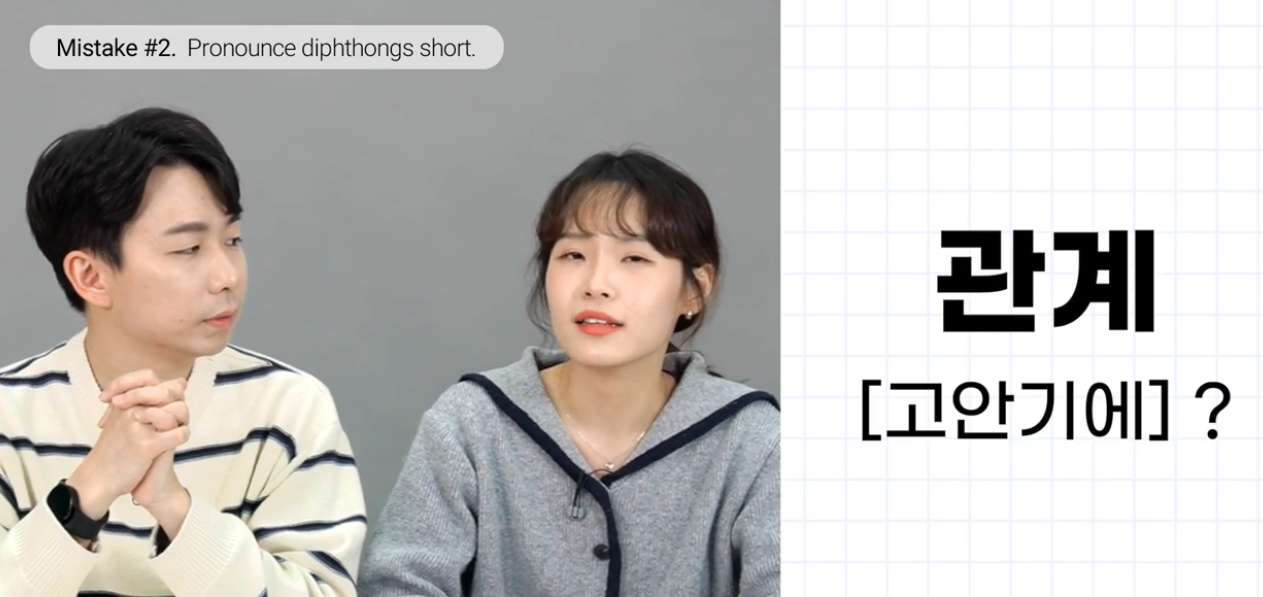
Some learners read it as [고안기에], stretching out the vowels.
But in Korean, vowels are short and crisp.
✅ Correct: [관계]
❌ Incorrect: [고안기에]
Compare it to English words like quiz or guacamole—you don’t drag out the vowels there either.
Other examples:
- 촬영 (filming) → say [촤령], not [초알영]
- 최고 (the best) → say [최고], not [초애고]
3️⃣ Omitting the Double ㄹ Sound
Finally, let’s talk about the double ㄹ rule.
When a final consonant ㄹ is followed by an initial ㄹ, like in 놀라다 (to be surprised), both should be clearly pronounced.
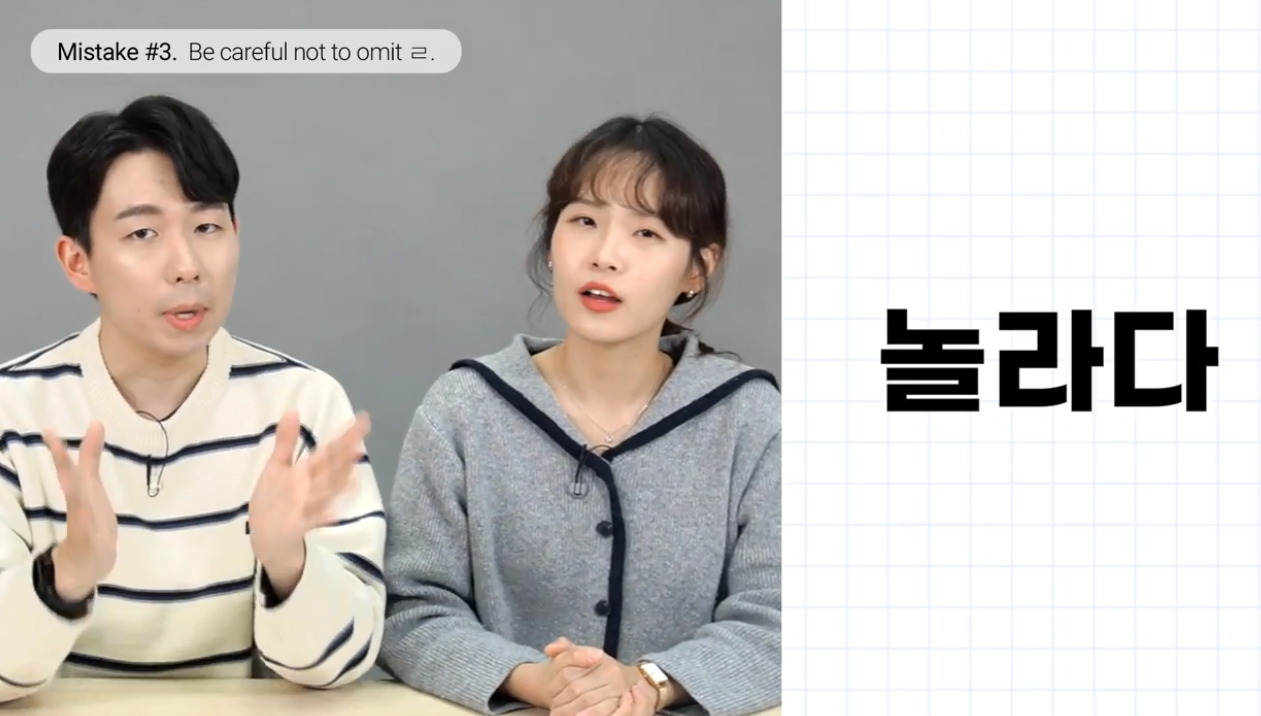
Many learners accidentally drop one and say [노라다], but that can change the meaning entirely!
Here are some examples:
- 올리다 (to raise/lift) → say [올리다], not [오리다]
(오리다 means “to cut”!) - 달라요 (it’s different) → say [달라요], not [다라요]
(다라요 is how you pronounce '달아요' and it means “it’s sweet.”) - 멀리하다 (to keep away) → say [멀리하다], not [머리하다]
(머리하다 means “to get your hair done.”)
If you enjoyed this post, we think you’ll love our video even more!
💡 Want to Master Korean?
Master Korean faster with the most trusted Korean textbooks worldwide. Our books are designed by experienced teachers and is packed with engaging lessons and tips that will help you improve quickly and confidently.
Explore our Catalog at TTMIK Books!